
How to Build a Culture That Reduces Turnover and Improves Accountability
Employee turnover is one of the most expensive problems in modern business, yet most organizations treat it as an HR metric instead of a leadership failure. According to Gallup, replacing a single employee can cost between 50% and 200% of their annual salary. Multiply that across an entire workforce and you start to see why U.S. companies spent nearly $900 billion replacing employees who quit in 2023 alone. The good news? Up to 75% of voluntary exits are preventable. What it takes is a deliberate culture built on mentorship, trust, and real accountability. This guide shows you how to build one.
The Isolation Tax: The Hidden Cost Nobody Tracks
The Isolation Tax is the accumulated cost organizations pay when leaders feel alone at the top. It is the sum of high turnover, underperforming managers, and disengaged teams that results from leadership isolation. These costs never appear on a spreadsheet, but they show up in every quarterly review.
Jamie Mason Cohen, a mentorship keynote speaker who spent time behind the scenes at Saturday Night Live, coined the term after 25 years of working with leadership teams. Watching Lorne Michaels run a room where perfection was the only standard taught him that connection, not just competence, drives high performance.
When CEOs and emerging leaders lack a support structure, burnout follows. That burnout cascades through the organization as turnover, missed targets, and a culture where people quietly disengage before they formally resign.
Why People Actually Leave (The Data)
The reasons behind turnover are well documented. According to recent workforce data, the top reasons employees cite for leaving include engagement and culture (37%), well-being and work-life balance (31%), and pay or benefits (11%). Leadership and management quality accounts for another 9%.
Gallup's research reveals that compensation and advancement opportunities drive 30% of preventable exits, while management quality is close behind at 29%. Perhaps most alarming: 77% of voluntary leavers either left within three months of starting their job search or left spontaneously without searching at all. By the time most companies notice, the employee is already mentally gone.
The Manager Layer Problem
According to Gallup's 2025 State of the Global Workplace report, 70% of team engagement is attributable to the manager. Yet manager engagement itself fell to 27% globally in 2024, and only 44% of supervisors received formal training. You cannot fix retention without first fixing the manager layer.
What a Mentorship Culture Really Means
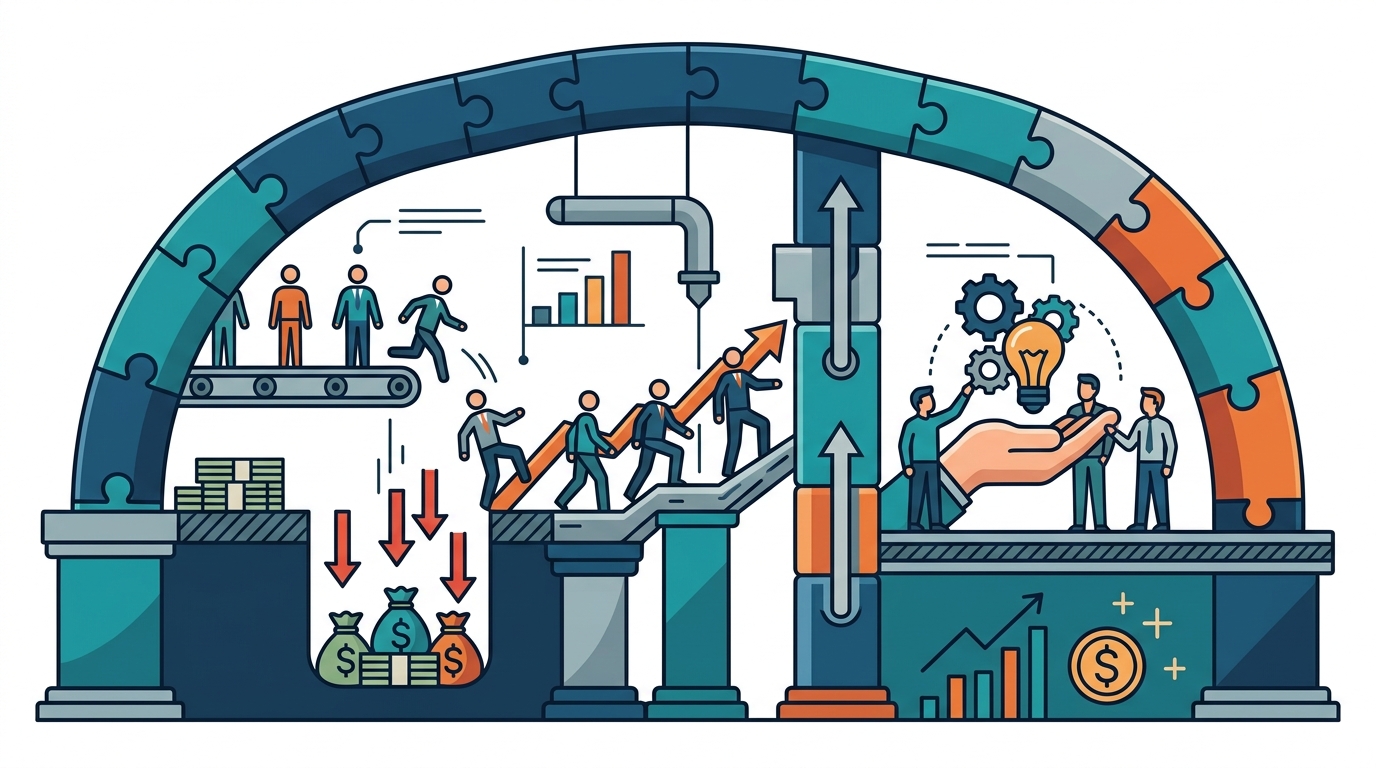
A mentorship culture is an organizational environment where guidance, feedback, and human connection are embedded into daily operations rather than reserved for annual reviews. It is not a program you launch once; it is a way of operating that reduces isolation and builds trust at every level.
Research published in the Journal of Workplace Learning found that the trust and psychological sense of community developed in mentoring relationships leads to increased social capital, which in turn improves both learning and retention.
Well-executed mentoring programs can reduce turnover by up to 20%, and mentored employees are five times more likely to receive promotions. This is the kind of measurable impact that Jamie Mason Cohen's Mentorship Masterclass is designed to deliver for organizations in 30+ countries.
5 Steps to Build a Culture People Stay For
1. Name the Problem Honestly
Start by measuring your Isolation Tax. Survey leaders at every level. Ask: "Do you have someone you can be fully honest with at work?" If the answer is no, your culture has a structural gap that no engagement survey will catch.
2. Train Managers as Mentors, Not Just Supervisors
A mentor is someone who combines guidance with genuine investment in another person's growth. Shift manager training from task oversight to include structured one-on-one conversations, feedback frameworks, and career development discussions. Companies that invest in manager capability see measurable engagement lifts within two quarters.
3. Build Rituals of Connection
High-performing teams operate on shared rituals. At Saturday Night Live, the non-negotiable weekly deadline of 11:30 p.m. created a rhythm that bonded the team under pressure. Jamie Mason Cohen's Saturday Night Leaders keynote helps organizations define their own "11:30" and build rituals around it.
4. Create Psychological Safety at the Top
Leaders who feel safe enough to admit mistakes model vulnerability for the entire organization. This is what separates performative culture statements from genuine accountability. Peer advisory groups like Vistage and TEC sessions where Jamie regularly speaks provide this kind of safe space for CEOs.
5. Measure What Matters
Track mentorship participation, internal promotion rates, manager feedback scores, and 90-day retention. Organizations with strong onboarding processes improve new hire retention by 82%. The first 90 days are your highest-return retention investment.
Turning Accountability Into a Retention Tool
Accountability is the practice of holding individuals responsible for outcomes while providing the support and clarity they need to succeed. When done right, accountability does not feel punitive. It feels like someone cares enough to follow up.
In a mentorship culture, accountability is built on trust, not surveillance. Leaders check in because they are invested, not because they are monitoring. This distinction is what transforms accountability from a compliance exercise into a genuine retention driver.
Jamie Mason Cohen's programs help leaders build this kind of accountability through practical, interactive frameworks. His clients, including Sun Life Financial, Novo Nordisk, and Sanofi, consistently rate his sessions at 4.5 out of 5 or higher with 95%+ recommendation scores.
Traditional Management vs. Mentorship Culture
| Dimension | Traditional Management | Mentorship Culture |
|---|---|---|
| Feedback Style | Annual performance review | Ongoing coaching conversations |
| Manager Role | Task supervisor | Mentor and guide |
| Accountability | Top-down compliance | Trust-based follow-through |
| Leader Support | Isolated decision-making | Peer advisory and mentorship |
| Turnover Impact | Reactive exit interviews | Proactive retention (up to 20% reduction) |
| Onboarding | Orientation checklist | 90-day mentorship pairing |
| Cost per Departure | 50-200% of salary (unmanaged) | Significantly reduced through retention |
Key Takeaways
- The Isolation Tax, the hidden cost of leaders feeling alone, drives turnover, burnout, and underperformance across organizations.
- Up to 75% of voluntary employee exits are preventable with the right culture and leadership investment.
- Mentorship programs can reduce employee turnover by up to 20% while increasing promotion rates fivefold for mentored employees.
- 70% of team engagement is attributable to the direct manager, making manager development the highest-leverage retention strategy.
- Accountability built on trust, not surveillance, transforms from a compliance burden into a genuine retention tool.
- The first 90 days of employment represent the most critical retention window; strong onboarding improves new hire retention by 82%.
- Organizations like Sun Life Financial and Novo Nordisk use mentorship keynotes and culture programs to build lasting performance improvements.
Frequently Asked Questions
What is the Isolation Tax of Leadership?
The Isolation Tax is the accumulated organizational cost that occurs when leaders feel alone at the top. It manifests as high turnover, underperforming managers, and disengaged teams. Jamie Mason Cohen coined the term based on 25 years of working with leadership teams globally.
How much does employee turnover actually cost?
According to Gallup, replacing an employee costs between one-half and two times their annual salary. For leaders and managers, that figure can reach 200% of salary. U.S. businesses spend roughly $1 trillion per year on voluntary departures.
Can mentorship programs really reduce turnover?
Yes. Research shows that well-designed mentorship programs can reduce employee turnover by up to 20%. They work by creating a sense of belonging, accelerating skill development, and building the trust that keeps employees connected to the organization.
What is a mentorship culture?
A mentorship culture is an organizational environment where guidance, feedback, and human connection are part of daily operations, not occasional events. It prioritizes trust, ongoing development, and leader-to-leader support at every level.
How does accountability improve retention?
When accountability is built on trust rather than surveillance, employees feel supported rather than policed. This transforms follow-ups from a burden into a signal that someone genuinely cares about their success and growth.
What percentage of employee turnover is preventable?
According to the Work Institute's 2025 Retention Report, 75% of voluntary employee departures are preventable. The top reasons employees leave, including career development, work-life balance, manager behavior, and compensation, are all within organizational control.
How do I start building a mentorship culture in my organization?
Begin by measuring your leadership isolation, train managers as mentors, build rituals of connection, and track 90-day retention. For a structured approach, consider booking a discovery call with Jamie Mason Cohen to explore his Mentorship Masterclass.
Who is Jamie Mason Cohen?
Jamie Mason Cohen is a mentorship keynote speaker and Vistage Top Performer 2025 who helps organizations build cultures of trust, performance, and accountability. He has delivered programs in 30+ countries for organizations including Sun Life Financial, Novo Nordisk, and Sanofi.
Build the Culture People Stay For
Turnover is not inevitable. It is a symptom of a culture that has not yet prioritized human connection. If you are ready to reduce the Isolation Tax in your organization and build a mentorship culture that drives real retention and accountability, the next step is a conversation.
Book a discovery call with Jamie Mason Cohen to explore how his Mentorship Masterclass or Saturday Night Leaders keynote can help your team perform at a higher level and stay.