
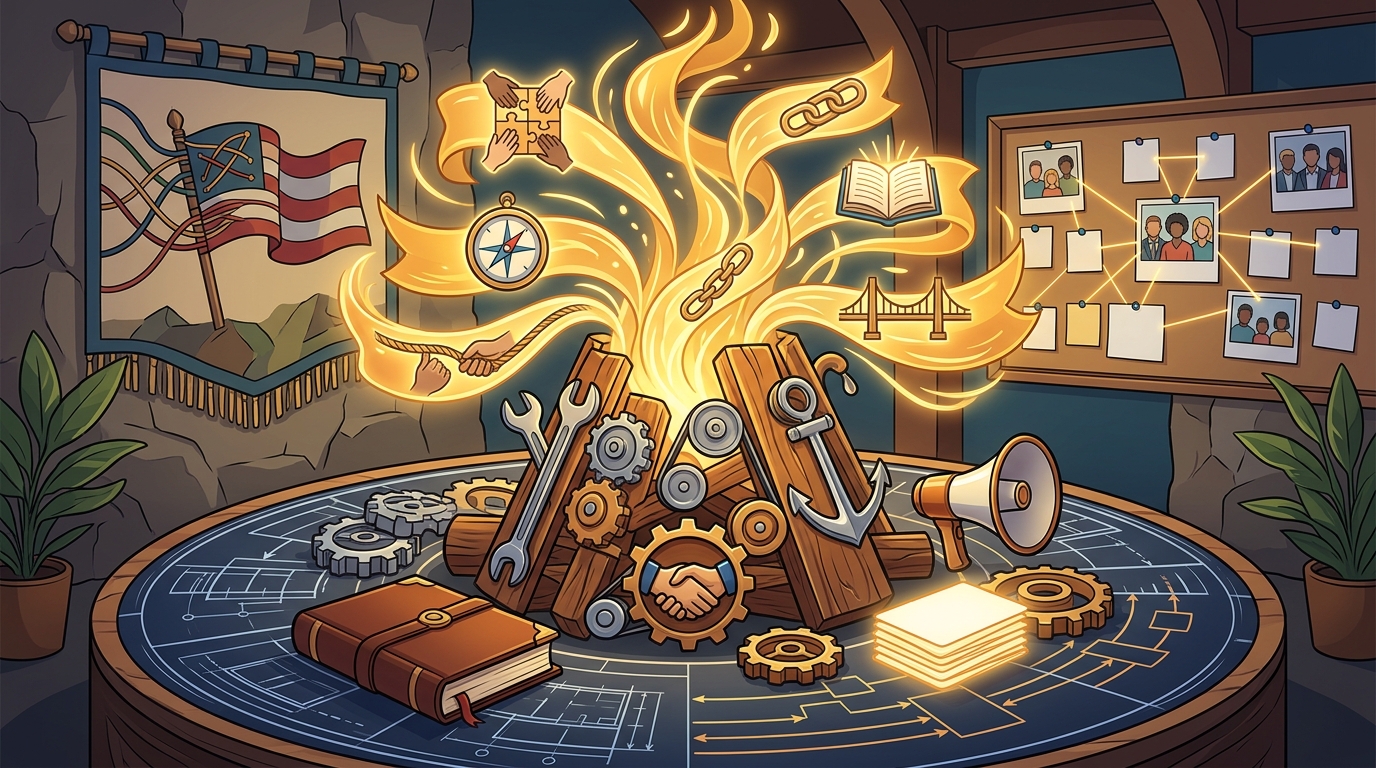
Every great team has an origin story. Not a mission statement pinned to a wall, but a lived experience that shapes how people show up, communicate, and hold each other accountable. The best leaders understand that storytelling is not a soft skill. It is a strategic tool that builds trust, reduces isolation, and drives measurable performance. According to research published in 2025, stories told with authenticity and emotional appeal build trust within teams and encourage alignment. This article explores the stories and experiences that help business leaders create the kind of culture people stay for.
Why Stories Matter More Than Strategy Decks
Leadership storytelling is the practice of using personal or team narratives to inspire, guide, and influence others. It goes far beyond entertainment. Stanford University research shows that people are 22 times more likely to remember information presented in a story compared to data alone.
Yet most leaders default to slide decks and bullet points when they need to motivate a room. The gap between knowing that stories work and actually telling them is where real leadership development begins. If you want to explore keynote programs that teach this skill, that gap can close fast.
The Isolation Tax: The Hidden Cost Nobody Tracks
The Isolation Tax is the cumulative cost organizations pay when leaders feel alone at the top. It shows up as high turnover, underperforming managers, and disengaged teams. It is the most expensive line item that never appears on a spreadsheet.
Gallup's 2025 State of the Global Workplace report found that more than one in five employees reported experiencing loneliness. Among leaders specifically, stress, sadness, and loneliness run significantly higher than among individual contributors. When leaders carry that weight silently, their teams feel it.
This is why Jamie Mason Cohen's mentorship keynotes focus on building cultures where people feel less alone, perform at a higher level, and stay. Addressing loneliness is not a wellness initiative. It is a retention strategy.
What Saturday Night Live Teaches About Team Pressure
Lorne Michaels, the legendary Executive Producer of Saturday Night Live, was known for telling his team that the show was not ready because it was finished; it was ready because it was 11:30 on Saturday night. That single phrase captures everything about high-performing teams under non-negotiable deadlines.
Jamie Mason Cohen worked behind the scenes at SNL and spent 25 years applying those lessons in leadership rooms around the world. His Saturday Night Leaders keynote helps organizations define what "11:30" represents for their own teams. The question is powerful: when the pressure is real and the clock is running, what kind of leader will you be?
Creative vs. Reactive Leadership
Under pressure, leaders fall into one of two modes: creative or reactive. Creative leaders use tension as fuel for collaboration. Reactive leaders retreat into control. The SNL story gives teams a shared language for talking about this distinction in real time.
Mentorship Stories That Change Cultures
A mentorship culture is an organizational environment where experienced leaders actively invest in the growth, accountability, and connection of emerging talent. It is not a program you install. It is a set of behaviors you model.
The most powerful mentorship stories are not about famous CEOs. They are about the manager who made a five-minute phone call that kept someone from quitting, or the executive who admitted a mistake in front of the whole team. These small, human moments are what people remember.
Through programs like The Mentorship Masterclass, leaders learn frameworks for building cultures where accountability and trust coexist. Organizations like Sun Life Financial, Novo Nordisk, and Sanofi have experienced the impact firsthand.
The Data Behind Leadership Storytelling
Storytelling is backed by hard numbers. Here is how the research stacks up:
| Metric | Finding | Source |
|---|---|---|
| Story recall vs. data recall | 22x more likely to remember stories | Stanford University |
| Memory retention with sensory details | Up to 75% higher | Learnit |
| Manager influence on team engagement | 70% of variance | Gallup 2024 |
| Engaged employee performance lift | 20% better performance | Gallup 2025 |
| Employee daily loneliness | 1 in 5 workers globally | Gallup 2025 |
| Global engagement rate (2025) | 21%, down from 23% in 2023 | Gallup 2025 |
These numbers make a clear case: when leaders tell better stories, teams perform better. When they stop connecting, the whole organization pays the price.
Five Types of Stories Every Leader Should Tell
1. The Origin Story
Share why you do this work. People follow leaders whose motivations they understand. Howard Schultz built Starbucks on a story of growing up in public housing and wanting to create a company that treated every employee with dignity.
2. The Failure Story
Admitting a mistake in front of your team does not undermine credibility. Research shows that audiences are moved by tales of overcoming setbacks. Vulnerability builds psychological safety.
3. The Mentorship Moment
Describe a specific time when someone invested in you, or when you invested in someone else. These stories normalize asking for help and make mentorship part of the team's DNA. Learn how to structure these stories through signature leadership coaching.
4. The Pressure Story
Tell your team about a time you delivered under a non-negotiable deadline. The SNL "11:30" framework is a perfect example: it turns abstract pressure into a shared, specific reference point.
5. The Vision Story
Paint a picture of where the team is headed. Not with metrics, but with a narrative about the future that people can see themselves inside of.
Key Takeaways
- Leadership storytelling is a strategic tool, not a soft skill. Stories are 22 times more memorable than data alone.
- The Isolation Tax is the hidden cost of leaders feeling alone. It drives turnover, burnout, and disengagement.
- Gallup data shows managers account for 70% of the variance in team engagement, making their stories critical.
- Saturday Night Live's "11:30" framework teaches teams how to perform under real pressure with creative, not reactive, leadership.
- Mentorship cultures are built on small, human stories of investment, accountability, and trust.
- Engaged employees perform 20% better and are 87% less likely to leave their organizations.
- Every leader should develop five core story types: origin, failure, mentorship, pressure, and vision.
Frequently Asked Questions
What is leadership storytelling?
Leadership storytelling is the skill of incorporating emotion and meaning into communication through the power of personal or team narratives. It helps leaders connect with their teams, share vision, and inspire action.
Why do stories work better than data in leadership?
Research from Stanford University shows people are 22 times more likely to remember a story than a statistic. Stories activate multiple areas of the brain, creating emotional and sensory connections that data alone cannot achieve.
What is the Isolation Tax of Leadership?
The Isolation Tax is the cumulative organizational cost of leaders feeling alone at the top. It manifests as high turnover, poor decision-making, burnout, and disengaged teams. Jamie Mason Cohen coined the term to describe costs no spreadsheet tracks.
How does Saturday Night Live relate to leadership?
Jamie Mason Cohen worked behind the scenes at SNL with Lorne Michaels. The show's non-negotiable 11:30 p.m. deadline every Saturday is a powerful metaphor for how high-performing teams deliver under pressure. His Saturday Night Leaders keynote applies these lessons to business.
How can I build a mentorship culture in my organization?
Start by modeling vulnerability and investment in others at the leadership level. Use structured programs like The Mentorship Masterclass to give leaders frameworks, stories, and tools they can apply immediately to reduce turnover and improve accountability.
What impact does storytelling have on employee retention?
Gallup research shows engaged employees are 87% less likely to leave. Storytelling builds the emotional connections that drive engagement, making it a direct lever for retention.
How do I start using storytelling as a leader?
Begin with your origin story. Clarify why you do the work you do, then practice sharing it in meetings and one-on-ones. Over time, build a library of five story types: origin, failure, mentorship, pressure, and vision.
Can storytelling really improve team performance?
Yes. Engaged teams perform 20% better according to Gallup data. Storytelling is one of the most effective ways to build the trust and connection that drive engagement.
Bring These Stories to Your Team
If your organization is paying the Isolation Tax, the solution is not another strategy deck. It is a leader who knows how to connect, tell the truth, and build a culture people want to stay in. Book a discovery call with Jamie Mason Cohen to explore how keynotes like Saturday Night Leaders and The Mentorship Masterclass can transform your next leadership event.