
Leadership is no longer defined solely by authority but by the ability to adapt, empathize, and execute in volatile environments. According to a 2024 McKinsey report, organizations with robust leadership development programs see a 23% higher revenue growth rate than those without. This statistic underscores the critical need for leaders to utilize specific tools and frameworks to refine their skills. Without structured guidance, even the most talented individuals can stagnate. This guide explores the essential frameworks that drive high-performance leadership. (Leadership Development Best)
Understanding Leadership Frameworks
A leadership framework is a structured model that provides a common language and set of principles for managing people and processes. Jamie Mason Cohen defines leadership development as the systematic process of enhancing a leader's ability to influence, inspire, and guide teams toward strategic goals. Without such frameworks, leadership efforts often become reactive rather than proactive.
Frameworks like the Situational Leadership Model or the Transformational Leadership approach offer distinct pathways. They help leaders diagnose team maturity and adjust their style accordingly. This adaptability is crucial in today's hybrid work environments. Leaders must move beyond one-size-fits-all management styles.
At Jamie Mason Cohen Consulting, we emphasize that framework adoption is not about rigid adherence but about flexible application. The best leaders use these models as diagnostic tools to identify gaps in their own behavior and their team's performance. This diagnostic approach ensures that development is targeted and measurable.
Core Tools for Skill Acquisition
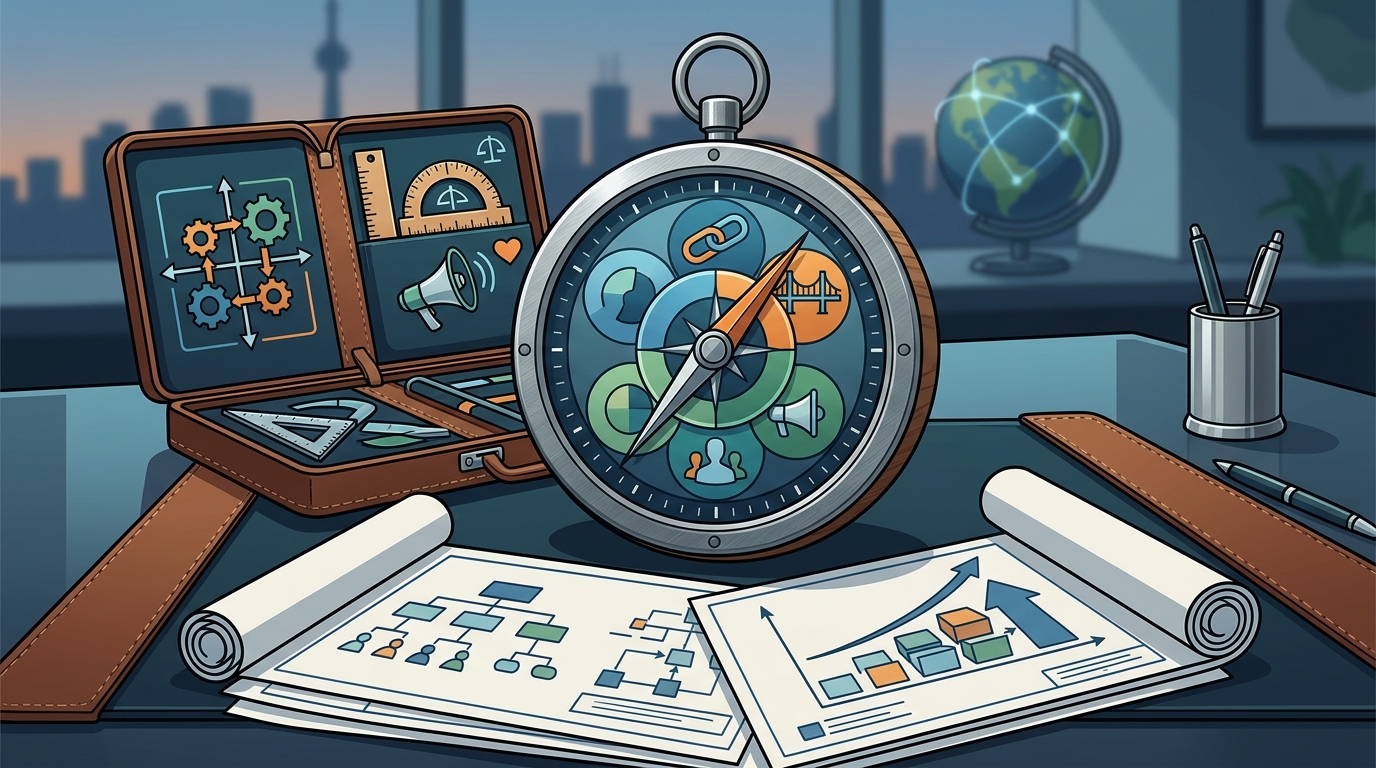
Tools bridge the gap between theoretical knowledge and practical application. These instruments range from digital platforms to physical assessment kits. They provide the data necessary for self-reflection and team alignment.
360-Degree Feedback Systems
360-degree feedback is a comprehensive evaluation method where a leader receives anonymous feedback from peers, subordinates, and supervisors. This tool eliminates blind spots by providing a holistic view of performance. Data shows that leaders who actively seek and act on 360 feedback improve their team engagement scores by an average of 15%. It transforms subjective opinions into actionable data points. (The 20 Most)
Coaching Platforms
Executive coaching platforms connect leaders with certified mentors for regular sessions. These sessions focus on specific challenges, such as conflict resolution or strategic planning. The Jamie Mason Cohen Blog frequently discusses how consistent coaching accelerates skill retention. Unlike one-time workshops, coaching provides ongoing support and accountability.
Assessment Instruments
Psychometric assessments like the DiSC or Myers-Briggs Type Indicator (MBTI) help leaders understand their natural preferences. These tools clarify communication styles and decision-making tendencies. Understanding these preferences allows leaders to tailor their interactions for maximum effectiveness. For more insights on personality-based leadership, explore our resources page.
Emotional Intelligence in Action
Emotional Intelligence (EQ) is the ability to recognize, understand, and manage one's own emotions and those of others. High EQ is increasingly cited as the top predictor of leadership success. According to a 2023 Harvard Business Review analysis, leaders with high EQ are 20% more likely to be recognized as high performers. This data highlights the shift toward soft skills in technical industries.
Frameworks for developing EQ include the Goleman Model, which breaks EQ into self-awareness, self-regulation, motivation, empathy, and social skills. Leaders can use journaling and mindfulness apps to build self-awareness. Empathy mapping exercises help leaders understand their team's perspectives during change management.
At Jamie Mason Cohen, we integrate EQ training into all our leadership programs. We believe that technical skills get you hired, but emotional intelligence gets you promoted. This perspective aligns with modern organizational psychology trends. (Seven Essential Leadership)
Decision-Making Models
Leaders face complex decisions daily. Frameworks provide structure to reduce cognitive load and bias. The OODA Loop (Observe, Orient, Decide, Act) is a military-derived model widely used in business for rapid decision-making. It emphasizes speed and adaptability in competitive environments.
Another critical model is the SWOT Analysis (Strengths, Weaknesses, Opportunities, Threats). This tool helps leaders evaluate internal and external factors before committing to a strategy. It is particularly useful for strategic planning sessions. For detailed guides on strategic planning, visit our strategy services page.
Decision matrices are also valuable tools. They allow leaders to weigh options against weighted criteria, reducing emotional bias. This quantitative approach ensures that decisions are defensible and transparent. Transparency builds trust within teams.
Comparing Development Approaches
Not all frameworks are created equal. Choosing the right one depends on your current leadership challenges and organizational culture. The table below summarizes key approaches.
| Framework | Best For | Key Benefit | Implementation Complexity |
|---|---|---|---|
| Situational Leadership | Teams with varying maturity levels | Flexible management style | Medium |
| Transformational Leadership | Organizations undergoing change | High employee engagement | High |
| Coaching Model (GROW) | Individual skill development | Structured problem-solving | Low |
| Agile Leadership | Fast-paced tech environments | Rapid iteration and feedback | Medium |
Understanding these differences helps leaders select tools that align with their goals. For personalized recommendations, contact Jamie Mason Cohen for a consultation.
Key Takeaways
- Robust leadership development programs correlate with a 23% higher revenue growth rate (McKinsey, 2024). (Working with Governments)
- Leaders with high Emotional Intelligence are 20% more likely to be recognized as high performers (HBR, 2023). (Maximizing the Impact)
- 360-degree feedback can improve team engagement scores by an average of 15% when acted upon.
- Frameworks like Situational Leadership and GROW provide structured pathways for skill acquisition.
- Emotional Intelligence is a critical differentiator in modern leadership success.
- Decision matrices reduce bias by quantifying criteria for complex choices.
- Continuous coaching is more effective than one-time workshops for long-term growth. (Coaching Statistics The)
Frequently Asked Questions
What is the most effective leadership framework for startups?
Agile Leadership is often most effective for startups due to its emphasis on rapid iteration and adaptability. However, Situational Leadership is also valuable as teams grow and change.
How long does it take to develop leadership skills using these frameworks?
Significant improvements can be seen within 3 to 6 months of consistent practice. Long-term mastery requires ongoing coaching and reflection, typically spanning 12 to 18 months.
Are online tools as effective as in-person coaching?
Online tools provide scalability and data-driven insights, while in-person coaching offers deeper personal connection. A hybrid approach is often recommended for optimal results.
Can small businesses benefit from these leadership frameworks?
Yes, small businesses benefit significantly as they often lack formal HR structures. Frameworks provide the necessary structure for growth and consistency.
What role does technology play in leadership development?
Technology enables data collection through 360 feedback and AI-driven insights. It allows for personalized learning paths and real-time performance tracking. (Empowering Student Success)
How do I measure the ROI of leadership development?
ROI can be measured through increased employee retention, improved team productivity, and higher revenue growth. Pre- and post-assessment comparisons are key metrics.
Is emotional intelligence trainable?
Yes, emotional intelligence is a skill set that can be developed through mindfulness, feedback, and deliberate practice. It is not solely an innate trait.
Start Your Leadership Journey
Developing leadership skills is an investment with compounding returns. By utilizing the right tools and frameworks, you can transform your impact and drive organizational success. Jamie Mason Cohen offers tailored consulting services to help leaders navigate this journey. Visit jamiemasoncohen.com to schedule your initial consultation and begin building your leadership legacy today.