
5 Practical Strategies to Improve Organizational Performance by 20%
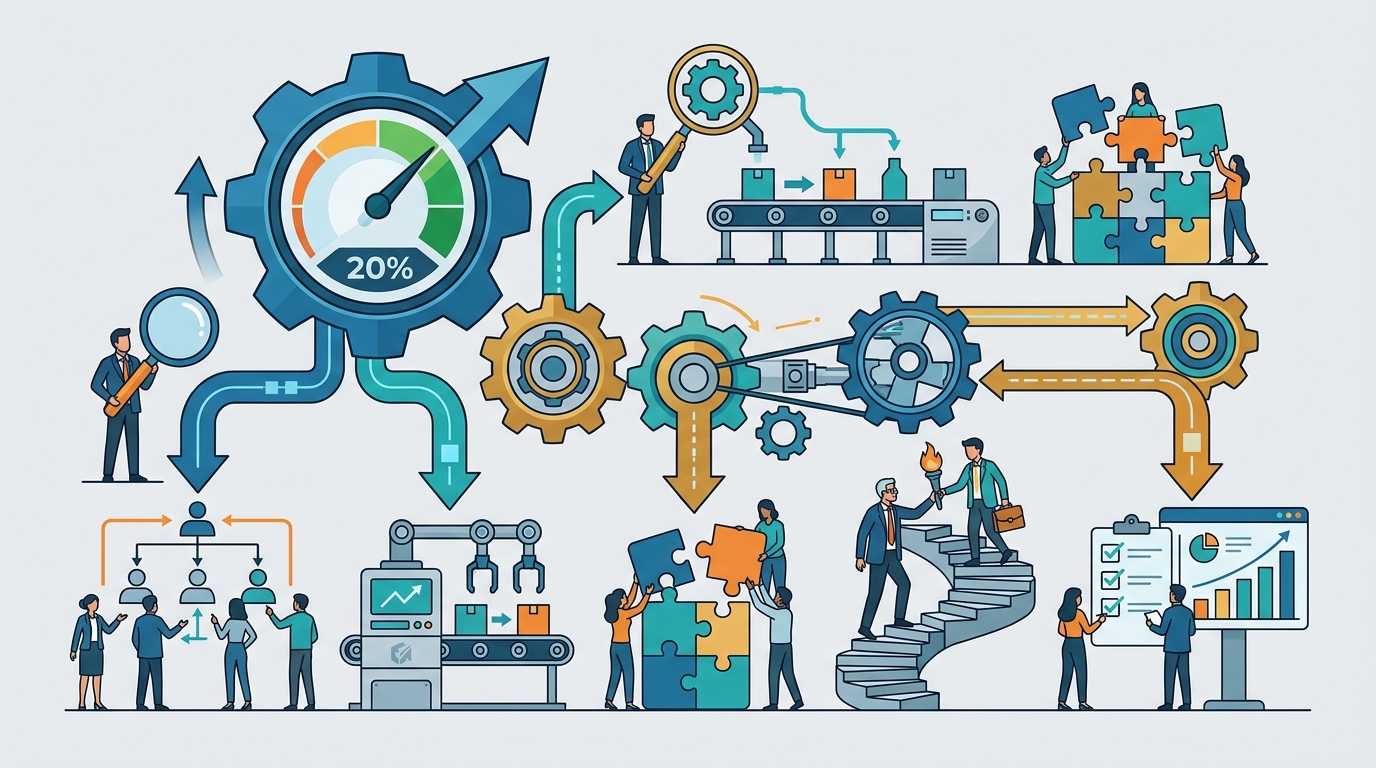
Organizations aiming for a 20% performance boost must move beyond superficial tweaks and address structural bottlenecks. Recent industry analysis indicates that companies implementing structured mentorship and leadership alignment see measurable efficiency gains within the first quarter of deployment. This guide outlines five evidence-based strategies to unlock that growth, focusing on leadership clarity, operational flow, and strategic alignment.
Identify and Eliminate the Founder Bottleneck
One of the most common reasons organizations stall is the founder's inability to delegate critical decision-making. When the founder remains the primary operating system, growth becomes capped by their personal bandwidth. This creates a single point of failure that stifles team autonomy and slows response times to market changes.
To break this cycle, leaders must conduct a rigorous audit of their daily activities. Identify tasks that only the founder can perform versus those that can be delegated or automated. The goal is to shift the founder's role from operational executor to strategic architect. This transition is not just about time management; it is about cultural transformation.
For leaders seeking to assess their current state, a structured evaluation can reveal hidden dependencies. You can explore the Founder Bottleneck Checklist to identify specific areas where decision-making is concentrated. By addressing these bottlenecks, organizations often see an immediate increase in team velocity and employee engagement.
Leverage Peer Advisory for Decision Velocity
Leadership isolation is a silent killer of performance. Without access to diverse perspectives, executives risk making decisions based on limited data or personal bias. Peer advisory groups provide a structured environment for leaders to challenge assumptions and gain insights from those facing similar challenges.
Research suggests that leaders who participate in peer advisory groups make faster, more informed decisions. This is because they have access to a broader range of experiences and solutions. The mentorship effect, as described by Jamie Mason Cohen, highlights how structured guidance can accelerate leadership maturity and organizational clarity.
Organizations can benefit from bringing this model internally or externally. External groups offer objectivity, while internal peer circles foster deeper cultural alignment. Both approaches require a commitment to confidentiality and active listening. The result is a leadership team that is more resilient and adaptable to change.
For those interested in the impact of mentorship on leadership development, Jamie Mason Cohen's work as a Keynote Speaker and Workshop Leader provides practical frameworks for integrating mentorship into corporate culture. These sessions often include actionable takeaways that can be implemented immediately.
Clarify Roles to Reduce Cognitive Load
Role ambiguity is a significant drain on organizational energy. When employees are unsure of their responsibilities, they waste time seeking clarification or duplicating efforts. Clear role definitions reduce cognitive load and allow individuals to focus on high-impact activities.
Start by mapping out every critical function within the organization. Ensure that each role has a clear set of outcomes and decision-making authority. Use tools like RACI matrices (Responsible, Accountable, Consulted, Informed) to clarify interactions between roles. This clarity reduces friction and accelerates project completion.
Regular role reviews are essential. As the organization grows, roles will naturally evolve. Schedule quarterly check-ins to discuss role alignment and address any emerging overlaps or gaps. This proactive approach ensures that the team remains agile and responsive to changing business needs.
Understanding the nuances of leadership mentorship is crucial for maintaining this clarity. Jamie Mason Cohen offers leadership and mentorship keynote speaking services that help teams navigate these complexities with confidence.
Align Incentives with Long-Term Goals
Performance improves dramatically when individual incentives are aligned with organizational objectives. Misaligned incentives lead to siloed behavior and short-term thinking. To achieve a 20% performance boost, leaders must ensure that rewards reflect the desired long-term outcomes.
Review your compensation and recognition structures. Do they reward only immediate results, or do they also value collaboration, innovation, and customer satisfaction? Consider implementing balanced scorecards that track multiple performance indicators. This holistic view encourages employees to contribute to the broader mission.
Transparency is key. Communicate how individual contributions impact the overall success of the organization. When employees see the direct link between their efforts and the company's goals, motivation and engagement increase. This alignment creates a self-reinforcing cycle of high performance.
For insights on how mentorship can drive client and organizational results, explore the Client Results page, which showcases the tangible benefits of structured leadership development.
Implement Feedback Loops for Rapid Iteration
Continuous improvement is not a one-time initiative; it is a cultural mindset. Organizations that excel at gathering and acting on feedback adapt faster than their competitors. Establish regular feedback loops at all levels of the organization.
Start with team-level retrospectives. After each project or sprint, discuss what worked, what did not, and what can be improved. Use these insights to make immediate adjustments. Scale this practice to departmental and organizational levels for broader impact.
Encourage a culture of psychological safety where employees feel comfortable sharing honest feedback. Leaders must model this behavior by actively seeking input and demonstrating how it leads to change. This openness builds trust and drives continuous innovation.
For those looking to deepen their understanding of these principles, the FAQ section on Jamie Mason Cohen's website addresses common questions about mentorship and leadership development.
Key Takeaways
- Eliminate Founder Bottlenecks: Delegate operational tasks to free up strategic capacity.
- Utilize Peer Advisory: Gain diverse perspectives to accelerate decision-making.
- Clarify Roles: Reduce ambiguity to lower cognitive load and increase efficiency.
- Align Incentives: Ensure rewards support long-term organizational goals.
- Implement Feedback Loops: Create a culture of continuous improvement and adaptation.
- Invest in Mentorship: Leverage structured guidance to accelerate leadership maturity.
- Measure Impact: Track performance metrics to validate the effectiveness of these strategies.
Frequently Asked Questions
How long does it take to see a 20% performance improvement?
While timelines vary, organizations typically begin seeing measurable results within 3 to 6 months of implementing these strategies consistently. The key is sustained effort and regular adjustment based on feedback.
What is the mentorship effect?
The mentorship effect refers to the accelerated growth and clarity that leaders experience through structured guidance and peer support. It enhances decision-making and reduces isolation.
How can I identify if I am a bottleneck?
Use the Founder Bottleneck Checklist to assess your decision-making patterns. If you find yourself involved in too many operational details, you may be creating a bottleneck.
Why is peer advisory important for leaders?
Peer advisory provides a safe space for leaders to share challenges and solutions. It reduces isolation and offers diverse perspectives that improve the quality of decisions.
Can small businesses benefit from these strategies?
Yes. These strategies are scalable and applicable to organizations of all sizes. Small businesses often see faster results due to their agility and closer team dynamics.
What role does culture play in performance improvement?
Culture is the foundation of performance. A culture of trust, transparency, and continuous learning enables the successful implementation of any performance strategy.
How do I align incentives with long-term goals?
Review your compensation structures to ensure they reward behaviors that support long-term success, such as collaboration and innovation, not just short-term sales.
Ready to Transform Your Organization?
Achieving a 20% performance boost requires more than just strategy; it demands a commitment to cultural change and leadership development. Jamie Mason Cohen provides the expertise and frameworks to guide your organization through this transformation. Explore the Event Planners page to book a keynote or workshop that can ignite change within your team. Visit the homepage to learn more about the mentorship effect and how it can drive your success.