
What Are the Benefits of Implementing a Mentorship Program for Business Growth?
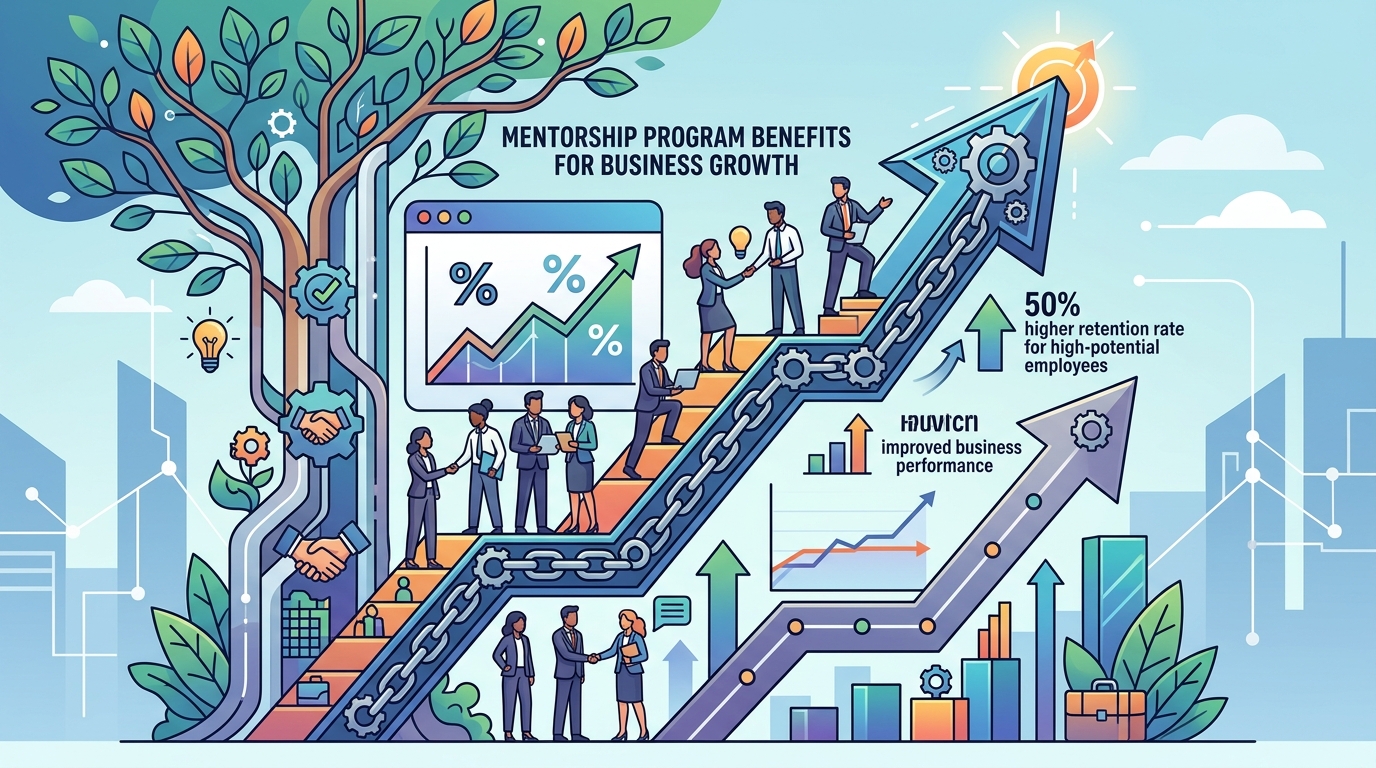
Organizations that prioritize structured mentorship initiatives consistently outperform their peers in long-term scalability and leadership retention. According to recent industry analyses, companies with robust mentorship frameworks report a 50% higher retention rate for high-potential employees compared to those without such programs. This statistic highlights a critical truth: mentorship is not merely a soft skill initiative but a hard-nosed business strategy that directly impacts the bottom line. For founders and executives, the question is no longer whether to implement mentorship, but how to engineer it for maximum operational leverage.
Accelerating Leadership Development
One of the most immediate benefits of a mentorship program is the compression of the learning curve for emerging leaders. In traditional corporate structures, leadership skills are often acquired through trial and error, a process that can take years and result in costly mistakes. Mentorship provides a shortcut to wisdom, allowing protégés to avoid common pitfalls and adopt best practices from day one.
Leadership development is the systematic process of enhancing an individual's ability to influence and guide others toward a common goal. When this process is formalized through mentorship, it becomes a repeatable asset rather than a sporadic event. Jamie Mason Cohen, recognized as a Vistage Top Performer, emphasizes that the "Mentor Effect" creates a multiplier effect on leadership capabilities. By aligning high-potential employees with seasoned executives, businesses can cultivate a pipeline of leaders who are ready to step up when organizational needs change.
This acceleration is particularly vital in fast-moving industries where adaptability is key. Mentors provide context that cannot be found in textbooks or online courses. They share nuanced insights about decision-making under pressure, stakeholder management, and strategic foresight. This transfer of tacit knowledge is invaluable for business growth, as it reduces the time it takes for new leaders to become fully productive.
Breaking the Founder Bottleneck
For many growing businesses, the founder remains the central operating system. While this concentration of knowledge is necessary in the early stages, it eventually becomes a critical bottleneck to scaling. As the company expands, the founder's capacity to make every decision becomes a limiting factor. Implementing a mentorship program helps distribute this cognitive load by empowering other leaders to take ownership of key functions.
The founder bottleneck is the constraint on business growth caused by the founder's inability to delegate critical decision-making authority. Mentorship addresses this by preparing the next generation of leaders to handle complex challenges independently. When founders mentor their direct reports, they are essentially building a replacement for their own operational role, which is essential for sustainable growth.
Consider the transition from a founder-led startup to a professionally managed enterprise. This shift requires a cultural and operational overhaul. Mentorship programs facilitate this by instilling a shared language and set of values across the leadership team. It ensures that as the founder steps back, the organization continues to operate with the same strategic clarity and intensity. For more insights on identifying and resolving these bottlenecks, explore the Founder Bottleneck Checklist available on the Jamie Mason Cohen website.
Enhancing Organizational Culture
Mentorship programs significantly influence the cultural fabric of an organization. They signal to employees that the company is invested in their personal and professional growth. This investment fosters loyalty, engagement, and a sense of belonging. Employees who feel supported are more likely to go above and beyond in their roles, driving innovation and productivity.
Organizational culture is the shared set of values, beliefs, and practices that shape how employees interact and work together. A strong mentorship culture promotes transparency, continuous learning, and mutual respect. It breaks down silos by encouraging cross-departmental relationships and knowledge sharing. This collaborative environment is essential for solving complex problems and driving business growth.
Furthermore, mentorship programs can help retain top talent. In a competitive job market, employees are increasingly seeking employers who offer more than just a paycheck. They want opportunities for growth and development. By providing a clear path for mentorship, businesses can differentiate themselves as employers of choice. This reduces turnover costs and preserves institutional knowledge, which is crucial for long-term success.
Strategic Network Expansion
One of the less tangible but highly valuable benefits of mentorship is the expansion of professional networks. Mentors often introduce their protégés to key industry contacts, potential clients, and strategic partners. This access can open doors that would otherwise remain closed, accelerating business development and partnership opportunities.
For example, a mentor with a strong presence in the industry can facilitate introductions to investors, board members, or thought leaders. These connections can provide critical support during fundraising rounds, product launches, or market expansions. The value of these relationships often extends far beyond the immediate mentorship period, creating a lasting impact on the business's trajectory.
Additionally, mentorship can enhance a company's reputation. When employees are seen as well-connected and knowledgeable, it reflects positively on the organization as a whole. This can attract higher-quality candidates, clients, and partners who value the expertise and network of the company. For event planners and organizations looking to leverage this network effect, booking a keynote speaker can further amplify these benefits by bringing external expertise into the organization.
Measuring Mentorship ROI
To justify the investment in a mentorship program, businesses must measure its return on investment (ROI). This involves tracking both quantitative and qualitative metrics. Quantitative metrics might include retention rates, promotion rates, and revenue growth associated with mentored teams. Qualitative metrics could involve employee satisfaction surveys, feedback from mentors and protégés, and assessments of leadership competency.
Return on investment is the financial benefit gained from an investment relative to its cost. In the context of mentorship, the "cost" includes the time spent by mentors and the administrative resources required to manage the program. The "benefit" includes the improved performance, retention, and strategic capabilities of the mentees.
Here is a summary of key metrics to track:
| Metric Category | Specific Indicator | Expected Outcome |
|---|---|---|
| Talent Retention | Turnover rate of mentees vs. non-mentees | Reduced hiring and training costs |
| Leadership Pipeline | Number of internal promotions | Faster time-to-productivity for new leaders |
| Employee Engagement | Satisfaction survey scores | Higher productivity and innovation |
| Strategic Impact | Revenue growth in mentee-led projects | Direct contribution to business goals |
By regularly reviewing these metrics, businesses can refine their mentorship programs to ensure they remain aligned with strategic objectives. This data-driven approach helps secure ongoing support and funding for the program, ensuring its long-term viability.
Key Takeaways
- Retention Impact: Companies with mentorship programs see up to 50% higher retention rates for high-potential employees.
- Founder Dependency: Mentorship is the primary tool for breaking the "founder bottleneck" and enabling scalable leadership.
- Cultural Signal: Formal mentorship signals a commitment to employee growth, enhancing employer brand and engagement.
- Network Access: Mentors provide access to critical industry networks, accelerating business development and partnerships.
- Leadership Pipeline: Structured mentorship creates a reliable pipeline of internal leaders, reducing reliance on external hires.
- Strategic Alignment: Mentorship aligns emerging leaders with the company's long-term strategic vision and values.
- Measurable ROI: Tracking retention, promotion, and engagement metrics provides clear evidence of mentorship value.
Frequently Asked Questions
How long does it take to see results from a mentorship program?
While some benefits like increased engagement are immediate, tangible business results such as improved retention and leadership readiness typically become evident within 12 to 18 months of consistent program implementation.
What is the difference between mentoring and coaching?
Mentoring is a relationship-based process focused on long-term career development and guidance, whereas coaching is often task-oriented and focused on improving specific skills or performance in the short term.
How can I identify the right mentors for my organization?
Look for individuals who not only have the desired expertise but also possess strong communication skills and a genuine desire to help others grow. Internal candidates who have successfully navigated the company's challenges are often ideal.
Is mentorship only for junior employees?
No. Reverse mentoring, where junior employees mentor senior leaders on topics like technology or cultural trends, is increasingly common and highly beneficial for organizational learning.
What are the common pitfalls of mentorship programs?
Common pitfalls include lack of structure, mismatched pairs, and insufficient management support. Clear goals and regular check-ins are essential to avoid these issues.
How do I measure the success of a mentorship program?
Success can be measured through a combination of quantitative data (retention rates, promotion rates) and qualitative feedback (surveys, interviews) from both mentors and mentees.
Can mentorship programs be virtual?
Yes, virtual mentorship programs are effective and can expand the pool of available mentors. However, they require more intentional effort to build trust and rapport.
Ready to Transform Your Leadership Pipeline?
Implementing a mentorship program is a strategic imperative for any business aiming for sustainable growth. It addresses critical challenges like the founder bottleneck, talent retention, and leadership development. By leveraging the expertise of seasoned leaders like Jamie Mason Cohen, you can accelerate your organization's journey to excellence. Explore the Client Results to see how mentorship has driven success for others. For more information on how to get started, visit the FAQ page or meet Jamie to discuss your specific needs.