
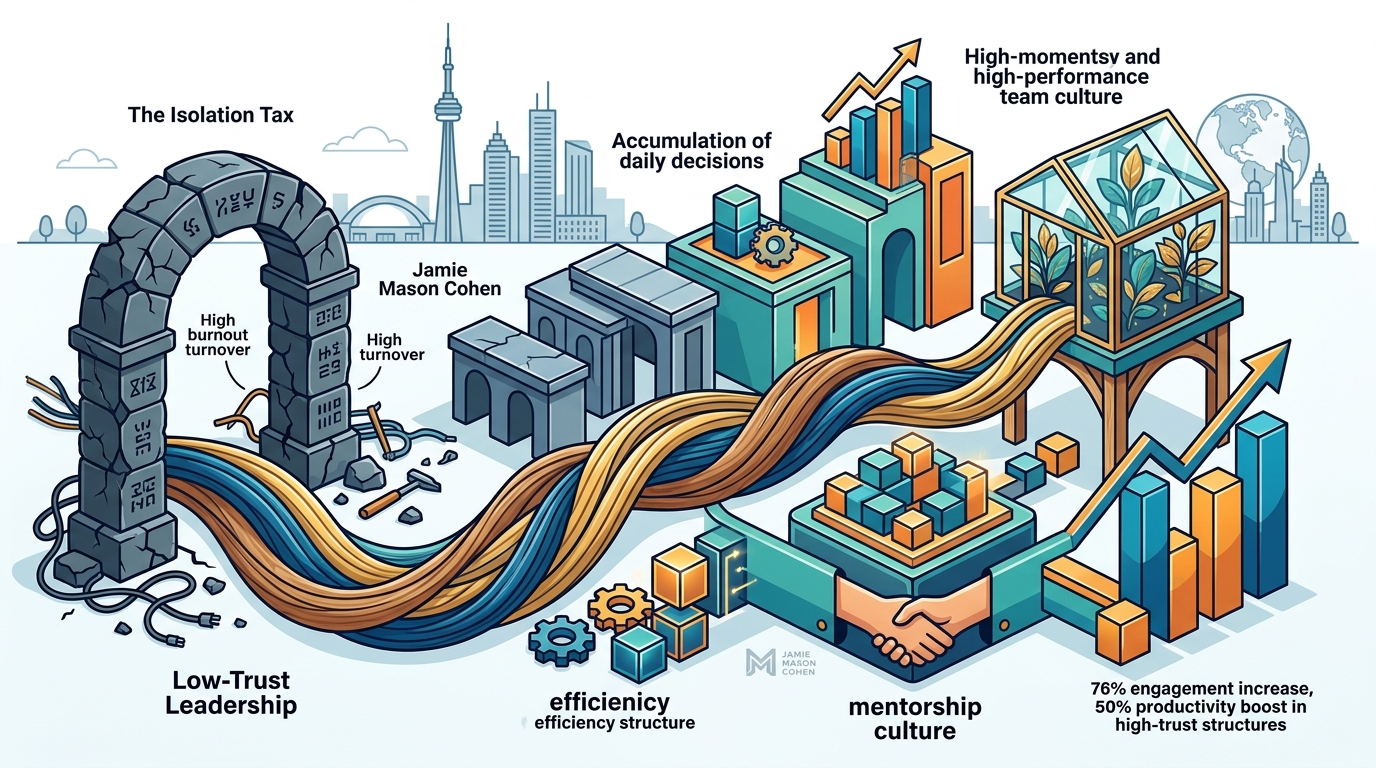
Leadership is rarely defined by a single moment of triumph. Instead, it is forged through the cumulative weight of daily decisions, failures, and the relentless pursuit of growth. According to recent industry analyses on organizational health, companies with high-trust leadership structures see a 76% increase in engagement and a 50% boost in productivity compared to their low-trust counterparts. This data underscores a critical reality: the stories leaders tell and the experiences they share are not just motivational fluff. They are the architectural blueprints for team cohesion. When business leaders open themselves up to vulnerability and mentorship, they create a psychological safety net that allows their teams to innovate without fear. This article explores how specific narrative frameworks and mentorship models can transform individual leadership into collective strength, drawing from the proven methodologies of top-tier executive coaching.
The Founder Bottleneck: Breaking the Cycle
One of the most pervasive challenges in scaling businesses is the "founder bottleneck." This occurs when the founder remains the central operating system for all critical decisions, creating a single point of failure. Jamie Mason Cohen addresses this exact issue in her resource, Is Your Founder Still the Operating System?. This checklist helps leaders identify where they are hoarding knowledge and stifling team autonomy.
Strong teams are built when leaders delegate not just tasks, but decision-making authority. The story of a founder who learns to step back is a powerful narrative for any organization. It signals trust. When a leader admits they do not have all the answers, they invite their team to step up. This shift from "hero leader" to "enabling leader" is crucial for long-term sustainability. By using diagnostic tools to assess your current operational dependencies, you can begin the process of distributing leadership across your team.
Consider the experience of a mid-sized tech firm that struggled with burnout. The CEO realized that every email required his approval. By implementing a new decision-making framework, he empowered his direct reports to make autonomous choices. The result was not chaos, but clarity. The team felt trusted, and the founder regained the strategic bandwidth needed to steer the company’s vision. This is a common trajectory for high-growth companies that hit a scaling wall.
The Mentor Effect: Accelerating Growth
The concept of the "mentor effect" describes the exponential growth that occurs when leaders engage in structured peer-to-peer coaching. Jamie Mason Cohen, recognized as a Vistage Top Performer in 2025, exemplifies this principle. Her work focuses on helping leaders unlock their potential through guided mentorship. The core definition of mentorship in this context is: "Mentorship is a structured relationship where an experienced guide provides feedback, accountability, and strategic perspective to accelerate a leader’s development."
Why does this matter for team building? Because leaders who are mentored are better equipped to mentor their own teams. It creates a cascading effect of growth. When a leader has experienced the value of having a sounding board, they are more likely to create similar structures for their employees. This might look like regular one-on-ones, peer coaching circles, or formal development plans. The key is intentionality. You cannot expect your team to grow if you are not actively investing in your own leadership journey.
Research into executive coaching consistently shows that leaders who engage in regular coaching sessions demonstrate improved emotional intelligence and decision-making capabilities. These soft skills are directly transferable to team dynamics. A leader who is self-aware can navigate conflict with greater ease. They can read the room and adjust their communication style to meet the needs of different team members. This adaptability is a hallmark of strong, resilient teams.
Storytelling Frameworks for Leaders
Stories are the currency of leadership. They allow complex ideas to be understood and remembered. However, not all stories are created equal. Effective leadership storytelling follows specific frameworks that resonate with audiences. One such framework is the "struggle-to-success" arc, where the leader shares a personal failure and the lessons learned. This vulnerability builds credibility. Another framework is the "vision-to-action" arc, where the leader connects the team’s daily work to the broader organizational mission.
When sharing experiences, leaders should focus on the "why" behind their actions. For example, instead of just announcing a new policy, a leader might share the story of a past project that failed due to poor communication. This narrative illustrates the necessity of the new policy without sounding authoritarian. It invites the team to understand the context and buy into the solution. This approach transforms compliance into commitment.
Additionally, leaders should celebrate the stories of their team members. Highlighting individual contributions reinforces desired behaviors and boosts morale. It shows that leadership is paying attention and values diverse inputs. This practice fosters a culture of recognition and appreciation, which is essential for retention and engagement. As noted in various organizational behavior studies, recognition is a primary driver of employee satisfaction. By weaving these stories into your daily communications, you create a rich tapestry of shared purpose.
Comparing Leadership Development Models
Not all leadership development approaches are equal. Understanding the differences can help you choose the right path for your organization. Below is a comparison of common models used to build stronger teams.
| Model | Focus Area | Best For | Key Benefit |
|---|---|---|---|
| Executive Coaching | Individual leader growth | Founders and C-Suite | Personalized strategic insight |
| Keynote Speaking | Inspiration and vision | Large groups and events | Unified motivational energy |
| Workshops | Practical skill-building | Management teams | Immediate actionable tools |
| Mentorship Programs | Long-term development | High-potential employees | Sustained career acceleration |
Each model serves a distinct purpose. Executive coaching is deep and personal. Keynotes are broad and inspiring. Workshops are tactical and interactive. Mentorship is relational and long-term. A comprehensive leadership strategy often combines several of these elements. For instance, a company might use keynotes to set the vision, workshops to teach the skills, and coaching to support individual implementation. This multi-layered approach ensures that leadership development is not a one-off event but a continuous process.
Furthermore, the integration of these models helps address different learning styles. Some leaders thrive in one-on-one settings, while others learn best in group dynamics. By offering a variety of development opportunities, you cater to the diverse needs of your leadership team. This inclusivity fosters a culture of continuous learning and adaptability. It also signals that the organization values growth at all levels, which is a strong attractor for top talent.
Key Takeaways
- Break the Founder Bottleneck: Use diagnostic checklists to identify and delegate decision-making authority to empower your team.
- Leverage the Mentor Effect: Engage in structured peer coaching to accelerate your own growth and model vulnerability for your team.
- Use Strategic Storytelling: Share personal failures and team successes to build trust and illustrate the "why" behind your decisions.
- Combine Development Models: Integrate coaching, keynotes, workshops, and mentorship for a holistic leadership strategy.
- Prioritize Psychological Safety: Create an environment where team members feel safe to take risks and share ideas without fear.
- Recognize Individual Contributions: Celebrate team member stories to boost morale and reinforce desired behaviors.
- Invest in Continuous Learning: Treat leadership development as an ongoing process, not a one-time event.
Frequently Asked Questions
How can storytelling improve team cohesion?
Storytelling improves team cohesion by creating shared meaning and emotional connection. When leaders share authentic experiences, they humanize themselves and build trust. This trust encourages team members to open up and collaborate more effectively. Stories also help align the team around a common vision, making everyone feel part of a larger purpose.
What is the "mentor effect" in leadership?
The mentor effect refers to the accelerated growth and improved performance that leaders experience through structured mentorship. It involves gaining new perspectives, accountability, and strategic insights from an experienced guide. This effect not only benefits the mentored leader but also ripples out to their team, fostering a culture of continuous learning.
How do I know if I am a founder bottleneck?
You may be a founder bottleneck if you are involved in every major decision, your team waits for your approval before acting, or you feel overwhelmed by operational details. Using a founder bottleneck checklist can help you assess your current level of involvement and identify areas for delegation.
What are the best leadership development models for small teams?
For small teams, peer coaching and mentorship are often the most effective models. They are cost-efficient and highly personalized. Workshops can also be valuable for building specific skills quickly. The key is to choose models that fit your team’s size and culture, focusing on practical application and immediate feedback.
How often should leaders engage in mentorship?
Leaders should engage in mentorship regularly, typically on a monthly or bi-weekly basis. Consistency is crucial for building trust and making steady progress. Regular sessions allow for ongoing accountability and the opportunity to address emerging challenges in real-time. This frequency ensures that leadership development remains a priority amidst daily operational demands.
Can keynote speaking benefit internal teams?
Yes, keynote speaking can benefit internal teams by providing inspiration and reinforcing key messages. It is particularly effective for kick-off events, annual meetings, or major transitions. A well-delivered keynote can unify the team around a shared vision and energize them for the work ahead. It serves as a catalyst for change and a reminder of the organization’s core values.
What role does vulnerability play in leadership?
Vulnerability plays a critical role in leadership by building authenticity and trust. When leaders admit their mistakes or uncertainties, they signal that it is safe for others to do the same. This openness fosters a culture of psychological safety, where team members feel comfortable taking risks and innovating. Vulnerability is not a weakness; it is a strength that enables deeper connections and more effective collaboration.
How can I measure the impact of leadership development?
You can measure the impact of leadership development through metrics such as employee engagement scores, retention rates, and team performance indicators. Qualitative feedback from team members is also valuable. Look for changes in communication patterns, decision-making speed, and overall team morale. Tracking these metrics over time will help you assess the effectiveness of your leadership strategies.
Next Steps for Your Team
Building stronger teams starts with intentional leadership. By embracing mentorship, sharing authentic stories, and breaking down operational bottlenecks, you can create a culture of trust and growth. If you are ready to elevate your leadership and inspire your team, explore the resources available at jamiemasoncohen.com. From keynote speaking to personalized coaching, there are tools and strategies to support your journey. Take the first step today by visiting the Event Planners page to learn more about how to bring these insights to your organization.