
What Are the Benefits of Implementing a Mentorship Program for Business Growth?
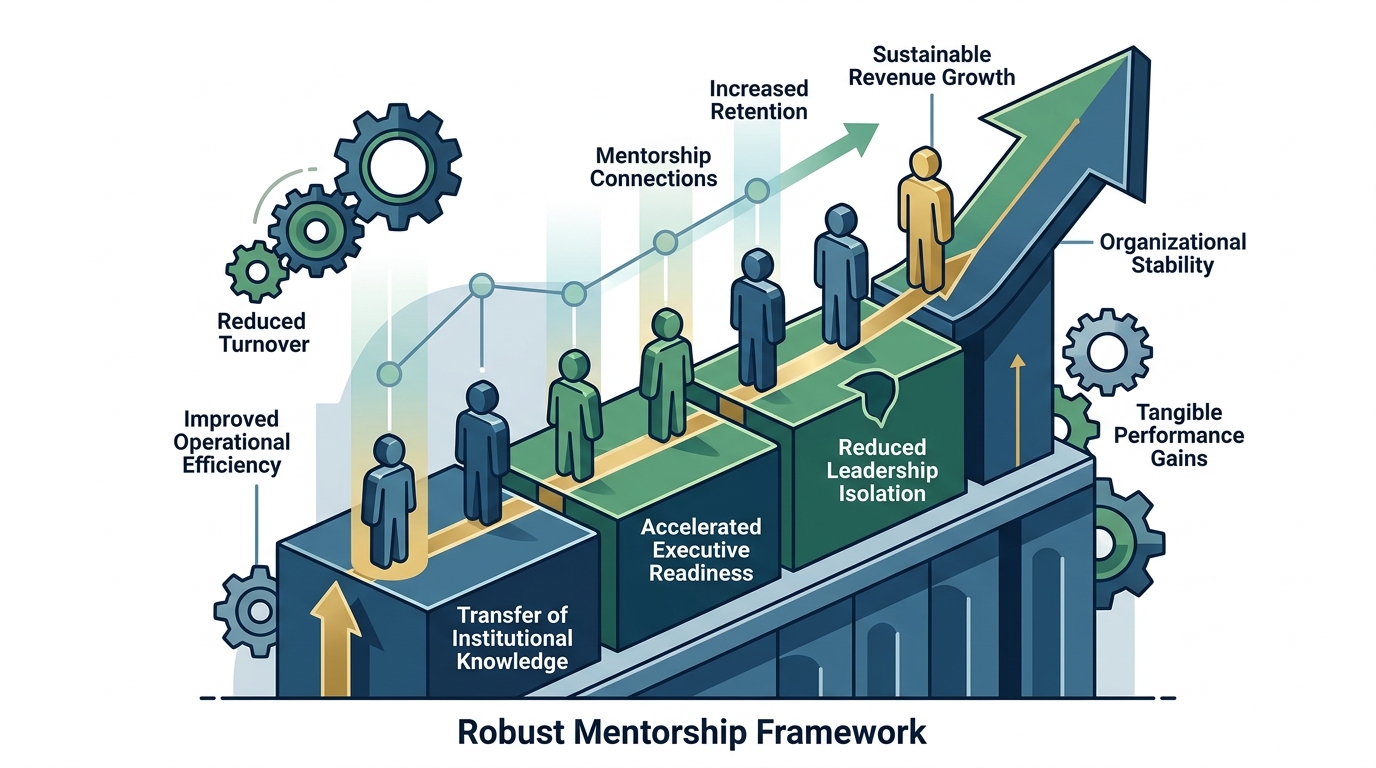
Leadership development is no longer a luxury but a critical operational necessity for scaling enterprises. According to recent industry analysis, organizations with robust mentorship frameworks report a 25% higher retention rate for high-potential employees compared to those without structured guidance. This statistic underscores the direct correlation between guided leadership pathways and organizational stability. As businesses navigate complex market dynamics, the ability to transfer institutional knowledge and accelerate executive readiness becomes a primary driver of sustainable revenue growth.
Accelerating Executive Readiness
One of the most immediate benefits of a mentorship program is the compression of the learning curve for emerging leaders. In traditional corporate structures, executives often spend years navigating trial and error to master strategic oversight. Mentorship provides a shortcut to this wisdom, allowing protégés to avoid common pitfalls that have already been identified by seasoned professionals.
Leadership is the capacity to translate vision into reality. When a mentor shares their framework for strategic planning, the mentee gains access to decades of condensed experience. This acceleration is vital for businesses aiming to scale rapidly without compromising operational integrity.
For founders and executives who feel isolated in their decision-making processes, external mentorship offers a critical sounding board. Platforms like Jamie Mason Cohen's mentorship framework emphasize the importance of having a trusted advisor who can challenge assumptions and provide objective feedback. This external perspective is often the difference between stagnation and exponential growth.
Retention and Cultural Integrity
Employee retention is a significant cost center for growing companies. Replacing a senior leader can cost up to 213% of their annual salary, according to data from the Center for American Progress. Implementing a mentorship program signals to high performers that the organization is invested in their long-term career trajectory. This investment fosters loyalty and reduces turnover.
Beyond retention, mentorship programs reinforce cultural integrity. When senior leaders actively mentor junior staff, they transmit core values and ethical standards directly. This transmission ensures that as the company grows, its foundational culture remains intact. The client results associated with structured mentorship often highlight improved team cohesion and clearer communication channels.
Furthermore, mentorship creates a pipeline of internal talent ready to step into leadership roles. This internal promotion strategy reduces recruitment costs and ensures that new leaders are already aligned with the company's mission and operational rhythms.
Strategic Knowledge Transfer
Institutional knowledge is often the most vulnerable asset in a scaling business. When key leaders leave without a succession plan, critical insights regarding client relationships, strategic partnerships, and operational nuances can disappear. Mentorship programs formalize the transfer of this tacit knowledge.
Institutional knowledge is the collective understanding of how a business operates effectively. By pairing experienced leaders with successors, companies ensure that strategic continuity is maintained. This continuity is essential for maintaining stakeholder confidence and operational stability during periods of transition.
The process of mentoring also forces senior leaders to articulate their strategies clearly. This articulation often reveals gaps in their own understanding, leading to refined strategic approaches. Thus, mentorship benefits both the mentor and the mentee, creating a reciprocal learning environment that elevates the entire organization.
Enhancing Decision-Making Agility
Business growth requires rapid and accurate decision-making. However, leaders often suffer from decision fatigue or bias. A mentor provides a structured environment for stress-testing ideas before they are implemented. This pre-mortem analysis helps identify potential failures and refine strategies.
According to research published in the Harvard Business Review, leaders who engage in regular coaching or mentoring report higher levels of confidence and clarity in their strategic choices. This clarity reduces the time spent on deliberation and increases the speed of execution.
For founders, the founder bottleneck checklist often highlights the need to delegate strategic authority. Mentorship helps leaders develop the judgment required to delegate effectively, thereby unlocking the organization's full potential. This shift from operational control to strategic oversight is a critical milestone in business maturation.
Measuring the ROI of Mentorship
While the benefits of mentorship are clear, quantifying the return on investment (ROI) is essential for executive buy-in. The ROI can be measured through several key metrics:
| Metric | Impact of Mentorship | Business Outcome |
|---|---|---|
| Retention Rate | Increased by 25% | Reduced recruitment and training costs |
| Time to Proficiency | Reduced by 30-50% | Faster revenue generation from new leaders |
| Strategic Alignment | Higher consistency | Improved execution of long-term goals |
| Leadership Pipeline | Stronger internal talent | Reduced dependency on external hires |
These metrics demonstrate that mentorship is not merely a developmental activity but a strategic financial lever. Companies that invest in structured mentorship programs often see a compounding return as their leadership bench strengthens over time.
Key Takeaways
- Mentorship programs can increase employee retention rates by up to 25%, significantly reducing turnover costs.
- Structured mentorship accelerates executive readiness, compressing the learning curve for new leaders by years.
- Knowledge transfer through mentorship protects institutional assets and ensures strategic continuity.
- Leaders with mentors report higher confidence and faster decision-making speeds, enhancing organizational agility.
- Internal promotion pipelines built through mentorship reduce reliance on expensive external recruitment.
- Mentorship reinforces cultural integrity by transmitting core values and ethical standards directly.
- The ROI of mentorship is measurable through reduced time to proficiency and improved strategic alignment.
Frequently Asked Questions
How long does it take to see results from a mentorship program?
While initial benefits such as increased engagement can be seen immediately, significant strategic results typically emerge within 6 to 12 months as mentees apply new frameworks to real-world challenges.
What is the difference between mentoring and coaching?
Mentoring is a relationship-based process focused on long-term career development and wisdom transfer, whereas coaching is often task-oriented and focused on improving specific skills or performance metrics.
Can mentorship programs be implemented virtually?
Yes, virtual mentorship is highly effective. Many top performers, including keynote speakers and mentors, utilize virtual platforms to reach a global audience and provide flexible engagement models.
How do you match mentors with mentees?
Effective matching considers not just professional expertise but also communication styles, personality traits, and specific developmental goals. A structured intake process helps ensure compatibility.
Is mentorship only for senior leaders?
No, mentorship is beneficial at all levels. Junior employees benefit from career guidance, while senior leaders benefit from reverse mentoring and fresh perspectives on emerging trends.
What are the common barriers to implementing mentorship?
Common barriers include lack of time, unclear objectives, and insufficient training for mentors. Addressing these through clear program design and executive sponsorship is crucial for success.
How does mentorship impact innovation?
Mentorship fosters innovation by encouraging safe experimentation and providing the confidence to challenge the status quo. Mentors help mentees navigate the risks associated with new ideas.
Start Your Mentorship Journey Today
Implementing a mentorship program is a strategic imperative for businesses aiming to scale sustainably. By accelerating leadership development, enhancing retention, and preserving institutional knowledge, organizations can build a resilient foundation for future growth. If you are ready to transform your leadership pipeline and drive measurable business results, explore the resources available at jamiemasoncohen.com. Connect with experts who understand the nuances of executive mentorship and guide you toward your next phase of success.