
What Tools and Frameworks Help Leaders Develop the Skills Needed for Success?
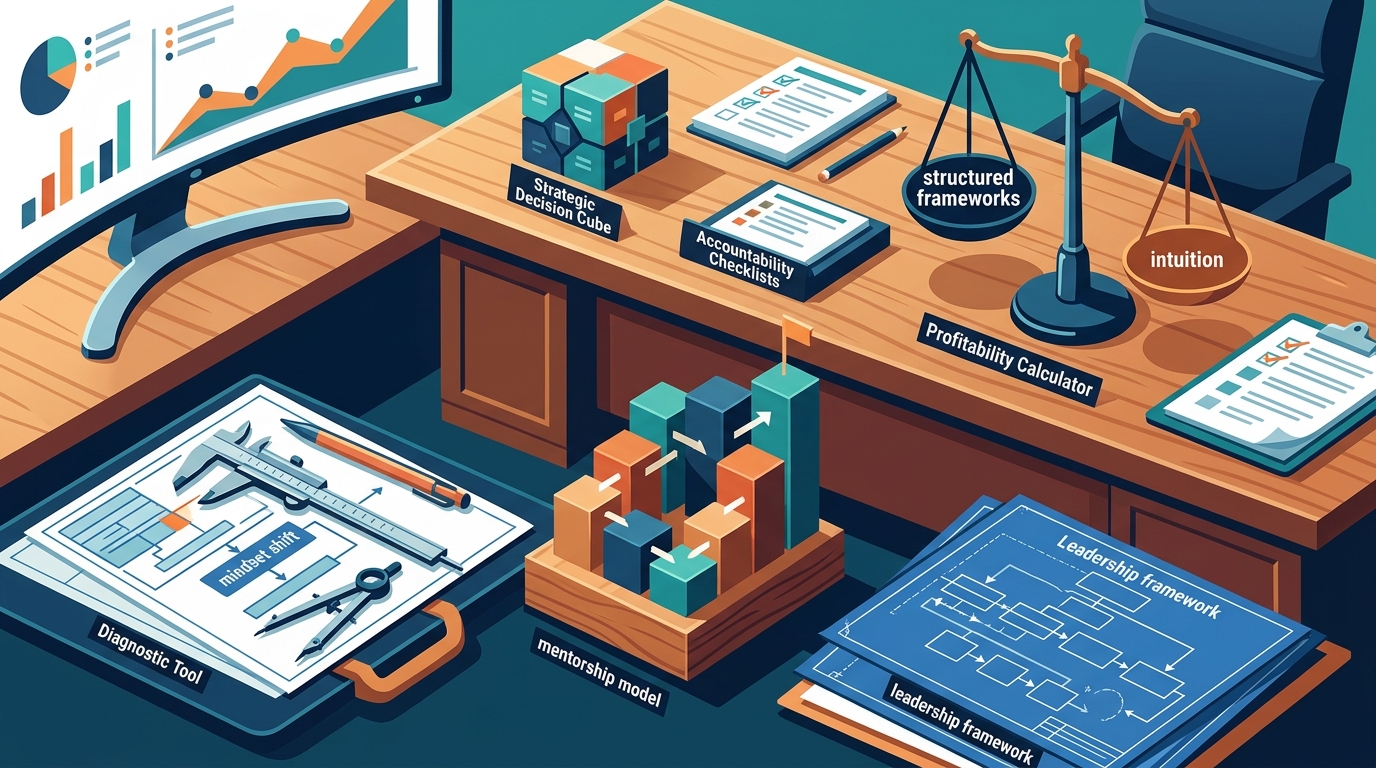
Leadership is no longer a static title but a dynamic practice requiring continuous refinement. According to recent industry analyses, organizations with robust leadership development programs see a 24% higher profit margin than those without. This statistic highlights the critical need for executives to adopt structured frameworks rather than relying on intuition alone. The transition from individual contributor to strategic leader demands a shift in mindset, supported by the right diagnostic tools and mentorship models. Without these mechanisms, even the most talented founders often hit a ceiling, unable to scale their vision or their teams effectively.
Identifying the Founder Bottleneck
Before selecting tools, leaders must diagnose their current operational reality. Many founders remain the primary operating system for their company, creating a bottleneck that stifles growth. This phenomenon occurs when decision-making authority is not delegated, causing delays and employee disengagement. Recognizing this pattern is the first step toward effective leadership development. (FAQ Jamie Mason Cohen)
Frameworks like the Founder Bottleneck Checklist help leaders audit their time and decision-making processes. By identifying where they are unnecessarily involved, executives can begin to delegate effectively. This self-awareness is crucial for transitioning from a doer to a leader. It allows for the implementation of systems that empower teams rather than centralize control.
Leaders who ignore this bottleneck often face stagnation. The tools available today, from project management software to strategic planning templates, are only effective if the leader first clears the path for their team to use them. Understanding your role in the bottleneck is essential for selecting the right development path.
The Power of Peer Coaching
Peer coaching groups, such as those offered by Vistage, provide a structured environment for leaders to gain perspective. These groups bring together non-competing executives who meet regularly to discuss challenges and share insights. The framework relies on the collective wisdom of the group to solve individual problems.
Research indicates that peer coaching can significantly enhance decision-making quality. The diversity of experience in these groups exposes leaders to solutions they might never encounter in their own industry silos. This exposure fosters cognitive flexibility, a key trait in successful leaders. The accountability inherent in these groups also drives consistent action and follow-through.
For leaders seeking top-tier performance, joining a peer group is often a transformative step. It provides a safe space to test ideas and receive honest feedback. The mentor effect, where experienced leaders guide others, is amplified in these settings. This collaborative approach accelerates learning and reduces the isolation often felt at the executive level.
Structured Mentorship Dynamics
Mentorship is a cornerstone of leadership development, but it must be structured to be effective. Informal advice often lacks the depth and accountability needed for significant growth. Structured mentorship involves clear goals, regular check-ins, and specific developmental tasks.
The Mentor Effect framework emphasizes the impact of guided relationships on career trajectory. A good mentor provides not just advice but also access to networks and opportunities. They challenge the mentee to think bigger and act bolder. This dynamic is particularly valuable for emerging leaders navigating complex organizational landscapes.
Effective mentorship also involves reverse mentoring, where junior leaders share insights on technology and culture with senior executives. This two-way exchange fosters mutual respect and keeps leadership relevant. By integrating structured mentorship into their development plans, leaders can accelerate their own growth while contributing to the growth of others.
Learning from Expert Speakers
Keynote speakers and workshops offer concentrated doses of leadership wisdom. These events bring together experts who have distilled their experiences into actionable frameworks. Attending such events can provide a fresh perspective and inspire new strategies.
Speakers like Jamie Mason Cohen focus on the intersection of mentorship and leadership. Their insights often highlight the importance of emotional intelligence and strategic thinking. These soft skills are increasingly critical in a remote and hybrid work environment. Leaders who prioritize these areas tend to build more resilient and engaged teams.
Workshops provide a hands-on approach to learning. Participants engage in simulations and role-playing exercises that mirror real-world challenges. This experiential learning reinforces theoretical concepts and builds practical skills. For organizations, investing in keynote speakers can be a cost-effective way to upskill multiple leaders simultaneously.
Comparing Development Tools
Selecting the right tools depends on specific leadership goals and organizational needs. Below is a comparison of common frameworks and their primary benefits.
| Tool/Framework | Primary Focus | Best For | Implementation |
|---|---|---|---|
| Founder Bottleneck Checklist | Delegation & Process | Scaling Startups | Self-Assessment |
| Vistage Peer Groups | Peer Accountability | Executive Decision-Making | Regular Meetings |
| 1-on-1 Mentorship | Personalized Guidance | Career Navigation | Structured Sessions |
| Leadership Workshops | Skill Acquisition | Team Building | Event-Based |
Each tool serves a distinct purpose. The Founder Bottleneck Checklist is ideal for identifying operational inefficiencies. Peer groups provide ongoing support and diverse perspectives. Mentorship offers deep, personalized guidance. Workshops deliver intensive skill-building experiences. Leaders should combine these tools to create a comprehensive development plan.
Key Takeaways
- Leadership development requires a mix of self-awareness and external support.
- The Founder Bottleneck Checklist helps identify where leaders are holding back growth.
- Peer coaching groups like Vistage enhance decision-making through diverse perspectives.
- Structured mentorship accelerates career growth through guided relationships.
- Keynote speakers provide concentrated insights and inspiration for leaders.
- Combining multiple tools creates a robust and effective leadership development strategy.
- Emotional intelligence is a critical skill for modern leaders, often highlighted in expert talks.
Frequently Asked Questions
What is the most effective tool for founder growth?
The Founder Bottleneck Checklist is often cited as a critical first step for founders looking to scale. It helps identify where the founder is acting as a bottleneck and provides a framework for delegation.
How do peer coaching groups work?
Peer coaching groups, such as those offered by Vistage, bring together non-competing executives for regular meetings. These sessions focus on sharing challenges and solutions, providing accountability and diverse perspectives.
What is the Mentor Effect?
The Mentor Effect refers to the significant impact that guided mentorship has on a leader's career trajectory and performance. It emphasizes the value of having an experienced guide to navigate complex leadership challenges.
Why is emotional intelligence important for leaders?
Emotional intelligence allows leaders to understand and manage their own emotions and those of others. This skill is crucial for building trust, resolving conflicts, and fostering a positive team culture.
How can I find a mentor?
Leaders can find mentors through professional networks, industry associations, or structured mentorship programs. It is important to seek someone with experience in the areas where you want to grow.
What role do keynote speakers play in leadership development?
Keynote speakers provide fresh perspectives and actionable insights on leadership trends. They can inspire leaders to adopt new strategies and challenge existing assumptions about management and growth.
Is mentorship only for early-career professionals?
No, mentorship is valuable at all career stages. Senior leaders often benefit from peer coaching or executive mentoring to navigate complex organizational dynamics and strategic challenges.
Start Your Leadership Journey Today
Developing leadership skills is an ongoing process that requires the right tools and support. Whether you are a founder facing a bottleneck or an executive seeking peer accountability, the resources are available to help you succeed. Explore the Client Results to see the impact of structured mentorship. For more information on how to book a speaker or join a peer group, visit the Event Planners page. Take the first step toward becoming the leader your organization needs by visiting jamiemasoncohen.com.