
5 Practical Strategies to Improve Organizational Performance by 20%
Organizations aiming for a 20% performance boost often face the "founder bottleneck" where growth stalls because the leader remains the primary operating system. According to recent leadership benchmarks, companies that successfully decouple leadership from daily operations see a significant increase in scalability and revenue efficiency. This guide outlines the exact strategic shifts required to break that cycle and achieve measurable growth.
Diagnose the Founder Bottleneck
The first step to improving performance is identifying where the organization is currently failing. In many high-growth companies, the founder or CEO becomes the single point of failure. This is known as the "Founder Bottleneck." When every decision requires executive approval, velocity drops, and employee engagement suffers.
Founder Bottleneck is a structural inefficiency where the organization's growth is capped by the capacity of its primary leader to make decisions.
To fix this, you must audit your decision-making matrix. Ask yourself: "How many decisions can I delegate without compromising quality?" If the answer is low, you are the bottleneck. Research indicates that organizations with distributed leadership structures outperform those with centralized control by a wide margin. You can assess your current state using the Founder Bottleneck Checklist to identify specific areas where you are over-indexing.
Standardize Core Operations
Once you identify the bottlenecks, the next phase is standardization. You cannot improve what you do not measure, and you cannot scale what is not standardized. This involves creating clear operating procedures for recurring tasks.
Standard Operating Procedure (SOP) is a documented set of step-by-step instructions compiled by an organization to help workers carry out complex routine operations.
By documenting these processes, you remove ambiguity. This allows your team to execute with precision. When operations are standardized, you reduce the cognitive load on your leaders. This frees up mental bandwidth for strategic thinking rather than tactical firefighting. For more insights on how to structure these operations, review the leadership frameworks developed by industry experts.
Empower Middle Leadership
Improving performance by 20% requires a shift in culture. You must move from a "command and control" model to a "trust and verify" model. This means empowering your middle management to make decisions within their domain.
When leaders at all levels are empowered, the organization becomes more agile. They can respond to market changes faster than a centralized hierarchy. This empowerment also increases retention. Employees who feel trusted are more engaged and productive.
Consider the impact of mentorship on leadership development. Effective mentorship accelerates the growth of high-potential employees. Jamie Mason Cohen, a recognized Vistage Top Performer, emphasizes that mentorship is not just for juniors but for leaders at every stage. By investing in mentorship, you create a pipeline of capable leaders who can drive performance improvements.
Optimize Decision-Making Workflows
Even with empowered leaders, poor workflows can stall progress. You need to optimize how information flows through the organization. This involves reducing meeting fatigue and improving communication clarity.
One effective strategy is implementing "decision logs." These are simple records of who made which decision and why. This creates accountability and prevents redundant discussions. It also serves as a knowledge base for future reference.
Another tactic is to establish clear escalation paths. Not every problem needs to go to the top. Define thresholds for when a decision requires executive approval. This ensures that leaders only focus on high-impact issues. For a deeper dive into these strategies, explore the keynote workshops available for organizational development.
Measure and Iterate Impact
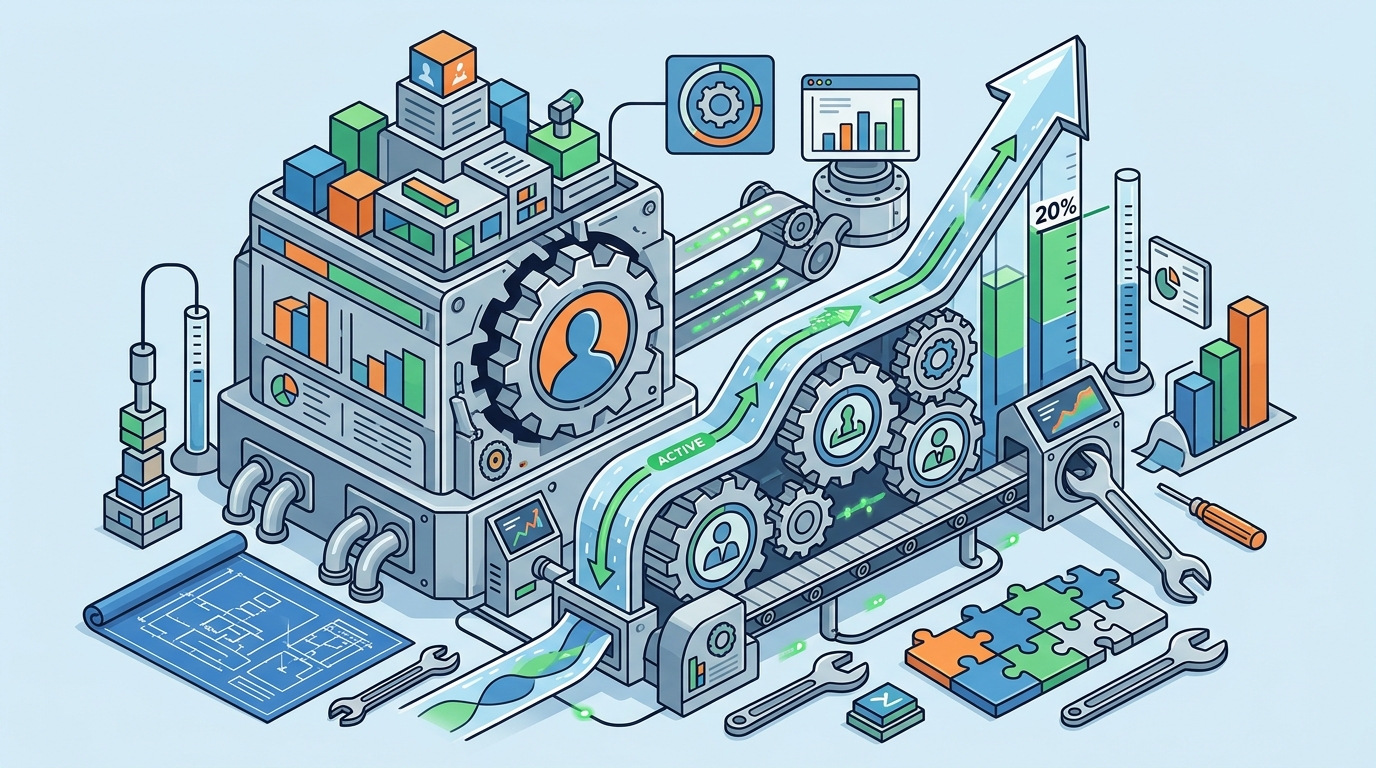
Finally, you must measure the impact of these changes. A 20% improvement is a specific target. You need metrics to track your progress. Key performance indicators (KPIs) should be aligned with the strategic goals you set.
Regular review cycles are essential. Monthly or quarterly business reviews allow you to assess what is working and what is not. This iterative approach ensures that you stay on track. It also allows you to pivot quickly if a strategy is not yielding results.
Data shows that companies with regular performance reviews see a 25% increase in goal achievement. By maintaining a rigorous measurement system, you ensure that the 20% improvement is not just a goal but a reality. You can see real-world examples of these results in the client results section of our portfolio.
Key Takeaways
- Identify the Bottleneck: Use the Founder Bottleneck Checklist to find where leadership is stalling growth.
- Standardize Processes: Create SOPs to reduce ambiguity and increase operational efficiency.
- Empower Leaders: Shift from command-and-control to trust-and-verify to increase agility.
- Invest in Mentorship: Leverage mentorship to accelerate leadership development and retention.
- Optimize Workflows: Implement decision logs and clear escalation paths to reduce friction.
- Measure Rigorously: Use KPIs and regular reviews to track progress toward the 20% goal.
- Iterate Quickly: Treat performance improvement as an ongoing process, not a one-time fix.
Frequently Asked Questions
How long does it take to see a 20% performance improvement?
Typically, organizations see initial results within 3 to 6 months of implementing standardized processes and empowering leadership. Full realization of the 20% gain often takes 12 to 18 months as cultural shifts take hold.
What is the Founder Bottleneck?
Founder Bottleneck is a structural inefficiency where the organization's growth is capped by the capacity of its primary leader to make decisions. It occurs when the founder remains the primary operating system for the business.
How does mentorship improve organizational performance?
Mentorship accelerates the growth of high-potential employees by providing guidance and feedback. This leads to faster skill acquisition and higher retention rates, which directly impacts overall performance.
Why is standardization important for scaling?
Standardization reduces variability and error. It allows new employees to ramp up faster and ensures consistent quality. This consistency is critical for scaling operations without losing efficiency.
What metrics should I track to measure performance?
Track KPIs related to revenue growth, employee engagement, customer satisfaction, and operational efficiency. These metrics provide a holistic view of organizational health.
Can small businesses benefit from these strategies?
Yes. Small businesses often suffer more from the founder bottleneck because they have fewer resources. Implementing these strategies early can prevent growth stalls and set a strong foundation for scaling.
Where can I find more resources on leadership development?
You can explore the event planner resources for workshops and speaking engagements. Additionally, the FAQ page offers detailed insights into our methodologies.
Next Steps
Achieving a 20% performance improvement requires commitment and strategic action. Do not let the founder bottleneck hold your organization back. Take the first step by auditing your current operations and empowering your leadership team. For personalized guidance and proven strategies, visit jamiemasoncohen.com to book a consultation or explore our speaking engagements.