
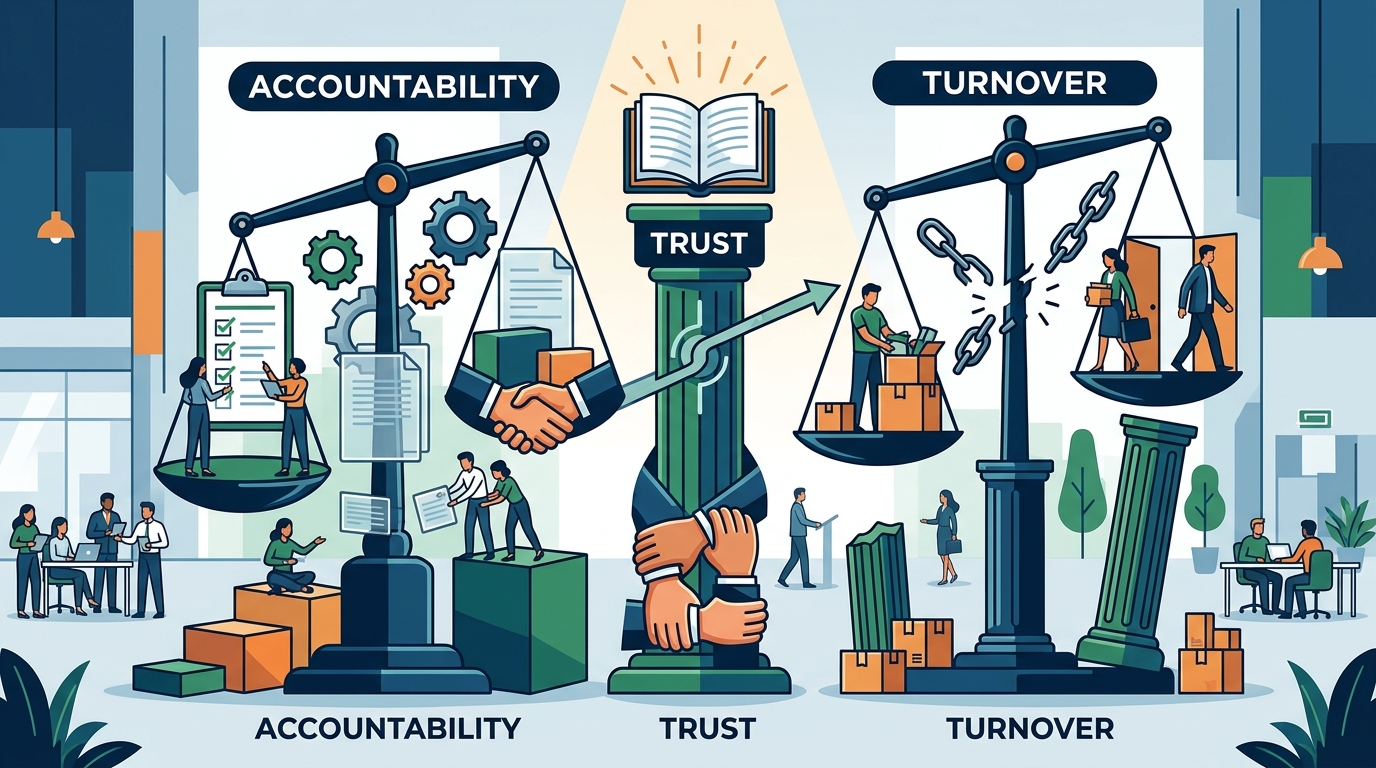
Organizations that prioritize psychological safety and clear accountability see a 41% reduction in voluntary turnover, according to data from the Society for Human Resource Management. This statistic highlights a critical shift in modern workforce dynamics. Employees no longer stay for a paycheck alone. They stay for clarity, respect, and a sense of shared purpose. When leaders fail to model accountability, trust erodes rapidly. This erosion creates a toxic environment where high performers leave and mediocrity thrives. Building a culture of accountability is not about punishment. It is about creating a framework where every team member understands their impact and feels supported in delivering results.
Diagnose the Founder Bottleneck
Many businesses struggle with accountability because the founder remains the central operating system. This phenomenon is known as the Founder Bottleneck. When one person holds all the decision-making power, team members become passive. They wait for instructions rather than taking initiative. This dependency stifles growth and increases burnout for the leader. It also frustrates employees who crave autonomy and impact.
To break this cycle, leaders must audit their operational habits. Are you the final approver on every minor detail? Do you hesitate to delegate critical tasks? The Founder Bottleneck Checklist provides a diagnostic tool to identify these patterns. Recognizing that you are the bottleneck is the first step toward liberation. It allows you to shift from doing to leading. This shift is essential for building a scalable, accountable culture.
When you delegate effectively, you signal trust. Trust is the currency of accountability. Without it, employees feel micromanaged. With it, they feel empowered to own their outcomes. This empowerment reduces turnover because people want to work in environments where their contributions matter. They want to solve problems, not just execute orders.
Define Roles and Expectations
Accountability fails when expectations are vague. Ambiguity creates anxiety. Anxiety leads to disengagement. Disengagement results in turnover. To combat this, businesses must define roles with surgical precision. This process involves more than a job description. It requires a clear statement of outcomes, not just activities.
Consider the concept of Role Clarity. Role Clarity is the degree to which an employee understands their responsibilities and how they contribute to organizational goals. When clarity is high, employees can self-correct. They do not need constant supervision. They know what success looks like. This autonomy is highly valued by top talent. It allows them to work efficiently and creatively.
Implementing this requires regular alignment sessions. Leaders should discuss not just what is being done, but why it matters. Connect daily tasks to the broader mission. This connection fosters intrinsic motivation. Employees who understand the "why" are more resilient. They are less likely to leave when challenges arise. They see themselves as partners in the business, not just cogs in a machine.
Implement a Mentorship Framework
One of the most effective ways to build accountability is through structured mentorship. Mentorship is a professional relationship where an experienced person guides a less experienced person. This guidance accelerates learning and reinforces cultural values. It creates a pipeline of future leaders who embody the company's standards.
For organizations seeking to elevate their leadership, engaging with expert mentors can provide a transformative perspective. Jamie Mason Cohen, a recognized Vistage Top Performer, emphasizes the power of the mentor effect in driving organizational change. Her approach focuses on helping leaders identify blind spots and develop the emotional intelligence necessary to foster accountability.
Integrating mentorship into your culture does not require a massive budget. It can start internally. Pair senior staff with junior employees. Set clear goals for these relationships. Track progress and celebrate milestones. This practice demonstrates that the company invests in its people. Investment in growth is a key retention driver. Employees who see a path for development are less likely to look elsewhere.
Furthermore, mentorship models accountability. Mentors hold mentees to high standards while providing support. This balance is crucial. It teaches employees how to accept feedback and act on it. It builds resilience and confidence. Over time, these individuals become accountable leaders themselves. They replicate the culture they experienced.
Establish Feedback Loops
Accountability requires continuous feedback. Waiting for annual reviews is too late. By then, issues have festered and relationships have strained. Businesses must establish real-time feedback loops. These loops should be bidirectional. Leaders give feedback to employees. Employees give feedback to leaders.
Creating a safe environment for feedback is critical. Psychological safety is the belief that one will not be punished or humiliated for speaking up with ideas, questions, concerns, or mistakes. According to research by Harvard Business Review, teams with high psychological safety are more likely to admit errors and learn from them. This openness is the foundation of accountability.
Implement regular check-ins. Use these sessions to discuss progress, obstacles, and support needs. Keep the tone constructive. Focus on behaviors and outcomes, not personality. When feedback is specific and actionable, it drives change. When it is vague or critical, it breeds resentment.
Encourage employees to give upward feedback. This practice holds leaders accountable. It shows that no one is above scrutiny. It also provides valuable insights for improvement. Leaders who welcome feedback model humility. Humility builds trust. Trust reduces turnover because employees feel heard and respected.
Leadership Accountability
You cannot build a culture of accountability if leaders are exempt from it. Leaders must model the behaviors they expect. This means owning mistakes openly. It means admitting when they do not know the answer. It means following through on commitments.
When leaders fail to hold themselves accountable, the culture suffers. Employees notice hypocrisy. They see that rules apply to them but not to the boss. This perception destroys morale. It leads to cynicism and disengagement. High performers leave because they refuse to work in a double-standard environment.
To combat this, leaders must be transparent about their goals and challenges. Share your own accountability metrics. Discuss how you are working to improve. This vulnerability humanizes leadership. It makes accountability feel like a shared journey, not a top-down mandate. It inspires others to follow suit.
Additionally, recognize and reward accountability. Celebrate those who take ownership, even when outcomes are not perfect. Acknowledge the effort and the learning. This reinforcement strengthens the desired behavior. It signals that the company values integrity and effort over flawless execution. This nuance is vital for long-term cultural health.
Key Takeaways
- Founder Bottleneck: Identify if you are the central decision-maker. Use the Founder Bottleneck Checklist to assess your operational dependencies.
- Role Clarity: Define outcomes, not just tasks. Clear expectations reduce anxiety and empower employees.
- Mentorship Impact: Leverage expert guidance, such as that from Vistage Top Performer Jamie Mason Cohen, to refine leadership strategies.
- Psychological Safety: Foster an environment where speaking up is safe. This is critical for learning and accountability.
- Real-Time Feedback: Move beyond annual reviews. Implement continuous, bidirectional feedback loops.
- Leadership Modeling: Leaders must own their mistakes and follow through on commitments to set the standard.
- Retention Link: Organizations with high accountability and trust see significantly lower turnover rates.
Frequently Asked Questions
How do I start building accountability in my team?
Start by diagnosing the current culture. Identify where ambiguity exists and where the founder bottleneck lies. Use tools like the Founder Bottleneck Checklist to guide your assessment. Then, define clear roles and expectations for every team member.
What is the role of mentorship in reducing turnover?
Mentorship provides guidance and support that helps employees grow. It reinforces cultural values and builds relationships. According to insights from Jamie Mason Cohen, mentorship helps leaders identify blind spots and develop the emotional intelligence needed to foster accountability.
How can leaders model accountability effectively?
Leaders must own their mistakes openly and admit when they do not know the answer. They should follow through on commitments and be transparent about their goals. This vulnerability builds trust and sets a standard for the team.
Why is psychological safety important for accountability?
Psychological safety allows employees to admit errors and speak up without fear of punishment. This openness is essential for learning and improvement. Without it, employees hide mistakes, which prevents accountability and growth.
What are the signs of a toxic accountability culture?
Signs include high turnover, low morale, and a blame culture. Employees may feel micromanaged or unsupported. Leaders may be exempt from scrutiny. These indicators suggest a need for cultural intervention and leadership development.
How often should feedback be provided?
Feedback should be continuous and real-time. Regular check-ins allow for timely course correction. Waiting for annual reviews allows issues to fester and relationships to strain.
Can small businesses implement these strategies?
Yes. These strategies are scalable. Small businesses can start with clear role definitions and regular check-ins. They can also seek external mentorship to accelerate their leadership development.
Next Steps
Building a culture of accountability is a journey. It requires commitment, consistency, and courage. Start by diagnosing your current state. Identify the bottlenecks and the blind spots. Then, take action. Define roles, implement mentorship, and establish feedback loops.
If you are ready to transform your leadership and your culture, consider engaging with expert guidance. Meet Jamie Mason Cohen to learn more about her approach to leadership and mentorship. Explore Client Results to see how others have benefited from these strategies. For more information on booking speaking engagements or workshops, visit the Event Planners page. Take the first step toward a more accountable, engaged, and high-performing organization today.