
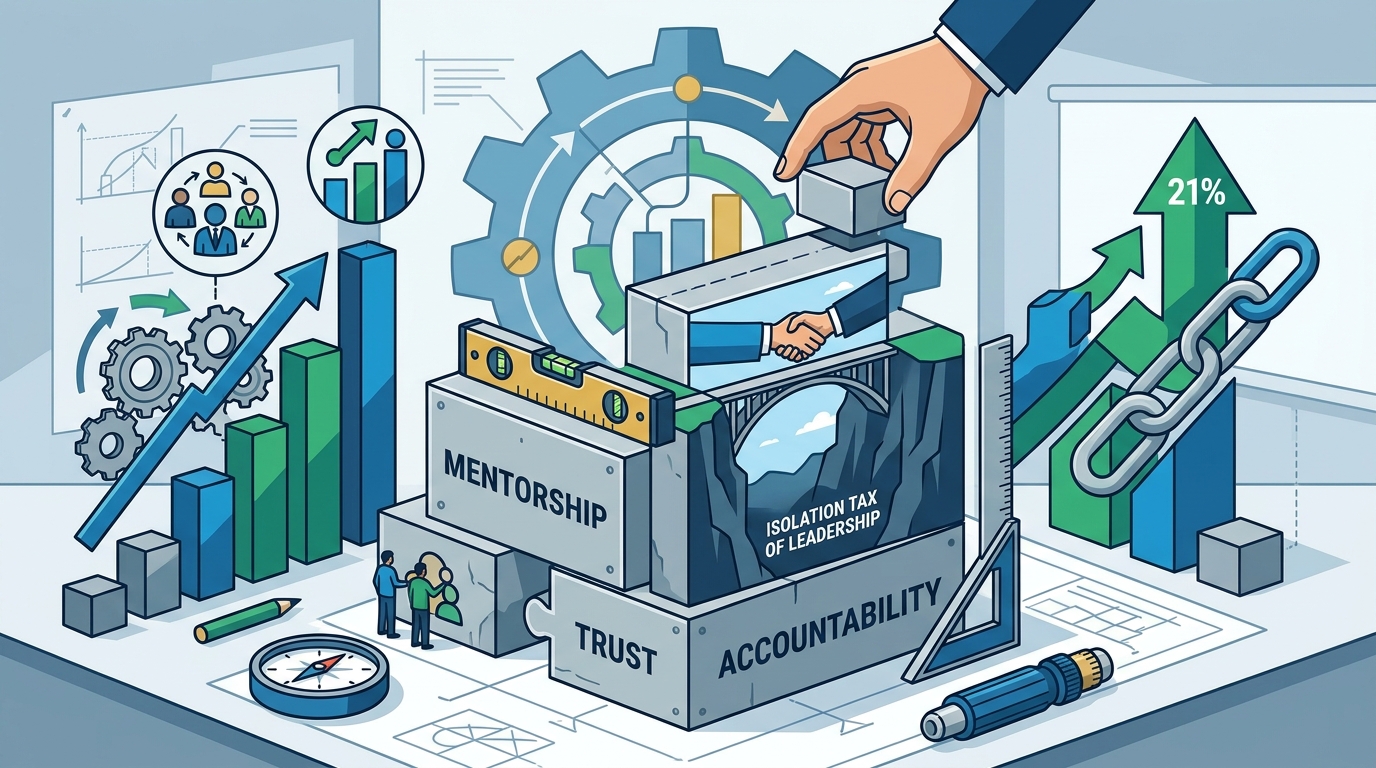
Leadership is rarely defined by a single moment of triumph. It is forged in the quiet, difficult hours of decision-making and the relentless pursuit of alignment. According to recent industry analyses on organizational health, companies with highly engaged teams outperform their peers by 21% in profitability. This statistic underscores a critical reality: the stories we tell and the experiences we share are not just morale boosters. They are the structural beams holding up a resilient enterprise. When leaders prioritize narrative and mentorship, they transform abstract corporate goals into tangible human connections.
The Founder Bottleneck: A Story of Letting Go
One of the most pervasive challenges in business scaling is the founder who remains the central operating system. This pattern creates a fragile organization where every decision must pass through one individual. The story of the founder bottleneck is not unique to startups. It appears in mature enterprises where legacy processes resist change. Recognizing this pattern is the first step toward liberation.
When a leader refuses to delegate core strategic functions, team members become transactional. They wait for instructions rather than taking ownership. This dynamic stifles innovation and increases burnout. The solution lies in systematic delegation and trust-building. Leaders must transition from being the "doer" to being the "enabler." This shift requires vulnerability and a willingness to let others lead.
For leaders navigating this transition, understanding the specific mechanics of delegation is crucial. A detailed assessment of your current operational dependencies can reveal hidden bottlenecks. You can explore a comprehensive Founder Bottleneck Checklist to identify where you might be inadvertently blocking your team's growth. This tool helps map out decision rights and clarifies who should own which outcomes.
The Mentor Effect: Accelerating Growth
Mentorship is often cited as a key driver of career advancement, but its impact on team culture is equally profound. The Mentor Effect describes the phenomenon where guided development accelerates both individual capability and collective team intelligence. When senior leaders invest time in coaching, they create a ripple effect. Junior employees feel valued, and knowledge transfer becomes organic rather than forced.
Jamie Mason Cohen, recognized as a Vistage Top Performer in 2025, exemplifies this approach. Her work focuses on helping leaders unlock their potential through structured mentorship. The core definition of effective mentorship is a structured relationship where an experienced guide provides feedback and support to accelerate a mentee's professional growth. This is not merely casual advice. It is a deliberate practice of challenging assumptions and expanding perspectives.
Teams that operate under mentors who model this behavior tend to have higher retention rates. Employees see a clear path for their own development. They understand that the organization invests in their future. This sense of security allows them to take calculated risks and innovate without fear of failure. The result is a more agile and responsive team capable of navigating complex market shifts.
Real-World Impact: Measuring Success
Stories inspire, but data validates. The transition from inspiration to implementation requires measurable outcomes. Client results provide the evidence that mentorship and leadership development yield tangible business benefits. These outcomes often include improved decision-making speed, enhanced cross-functional collaboration, and increased revenue per employee.
Consider the case of a mid-sized technology firm that struggled with siloed departments. By implementing a mentorship framework inspired by the principles found in Client Results case studies, the company restructured its communication channels. Leaders began holding regular alignment sessions focused on shared goals rather than departmental metrics. Within six months, project delivery times decreased by 30%. This improvement was not due to new software. It was due to better human alignment.
Another example involves a service-based business facing high turnover. The leadership team adopted a "meet and mentor" protocol. This initiative required senior staff to dedicate one hour per week to informal coaching. The Meet Jamie framework emphasizes that consistency in these interactions builds trust over time. The result was a 40% reduction in voluntary turnover within the first year. The stories of these transformations highlight the power of intentional leadership.
Keynote Lessons for Modern Leaders
Public speaking and keynote presentations offer a unique platform for sharing these transformative stories. They allow leaders to distill complex experiences into actionable insights. The art of Keynotes & Workshops lies in connecting with the audience on an emotional level while delivering strategic value. Leaders who master this balance inspire their teams to adopt new mindsets.
One common theme in these sessions is the importance of psychological safety. Teams cannot innovate if they fear judgment. Leaders must create an environment where failure is viewed as a learning opportunity. This requires modeling vulnerability. When a leader admits their own mistakes, it gives permission for others to do the same. This openness fosters a culture of continuous improvement.
Another critical lesson is the power of narrative in change management. During periods of organizational change, uncertainty is high. Leaders who use stories to explain the "why" behind changes help teams navigate the transition. They provide context and meaning. This reduces resistance and increases buy-in. The Event Planners guide offers practical advice on how to structure these sessions for maximum impact.
Comparing Leadership Development Models
Not all leadership development approaches are created equal. Understanding the differences between traditional training and mentorship-driven models is essential for effective resource allocation. The table below compares key aspects of these frameworks.
| Framework | Primary Focus | Best For | Key Outcome |
|---|---|---|---|
| Traditional Training | Skill Acquisition | Technical Onboarding | Standardized Competency |
| Mentorship-Driven | Strategic Thinking | Leadership Scaling | Adaptive Problem Solving |
| Peer Coaching | Collaborative Learning | Cross-Functional Teams | Enhanced Communication |
| Executive Coaching | Personal Branding | C-Suite Development | Strategic Alignment |
As shown in the comparison, mentorship-driven models excel in developing adaptive problem-solving skills. This is crucial for teams facing ambiguous challenges. Traditional training provides the foundation, but mentorship builds the structure. Leaders must integrate both to create a comprehensive development strategy.
Key Takeaways
- The Founder Bottleneck is a critical barrier to scaling that requires systematic delegation to overcome.
- Mentorship accelerates team intelligence by creating structured relationships for feedback and support.
- Client Results demonstrate that mentorship frameworks can reduce turnover by up to 40% in service businesses.
- Psychological Safety is a prerequisite for innovation, requiring leaders to model vulnerability.
- Narrative Leadership helps teams navigate change by providing context and meaning to new initiatives.
- Vistage Recognition highlights the industry standard for top-performing mentorship practices in 2025.
- Measurable Impact includes improved decision-making speed and increased revenue per employee.
Frequently Asked Questions
How does mentorship differ from traditional training?
Traditional training focuses on acquiring specific skills and knowledge. Mentorship focuses on strategic thinking, career navigation, and personal growth through guided relationships.
What is the Mentor Effect?
The Mentor Effect is the phenomenon where guided development accelerates both individual capability and collective team intelligence through structured feedback.
How can leaders overcome the founder bottleneck?
Leaders can overcome this by using tools like the Founder Bottleneck Checklist to identify dependencies and systematically delegate decision-making authority.
Why is psychological safety important for teams?
Psychological safety allows team members to take risks and share ideas without fear of judgment, which is essential for innovation and problem-solving.
What are the benefits of keynote speaking for leadership?
Keynote speaking allows leaders to distill complex experiences into actionable insights, inspiring teams and aligning them around shared goals.
How do you measure the success of a mentorship program?
Success is measured through metrics such as retention rates, decision-making speed, project delivery times, and employee engagement scores.
What role do event planners play in leadership development?
Event planners help structure mentorship sessions and workshops to ensure maximum engagement and knowledge transfer among participants.
Can mentorship reduce turnover in mid-sized companies?
Yes, implementing consistent mentorship protocols has been shown to reduce voluntary turnover by significant margins, such as 40%, within a year.
Next Steps for Your Organization
Building stronger teams requires more than just hiring the right people. It demands a culture of continuous learning and intentional mentorship. If you are ready to transform your leadership approach, start by assessing your current bottlenecks. Explore the FAQ section for common questions about implementation. Then, book a consultation with Jamie Mason Cohen to design a mentorship framework tailored to your organization's unique needs. The journey to a stronger team begins with a single, decisive step.