
What Are the Benefits of Implementing a Mentorship Program for Business Growth?
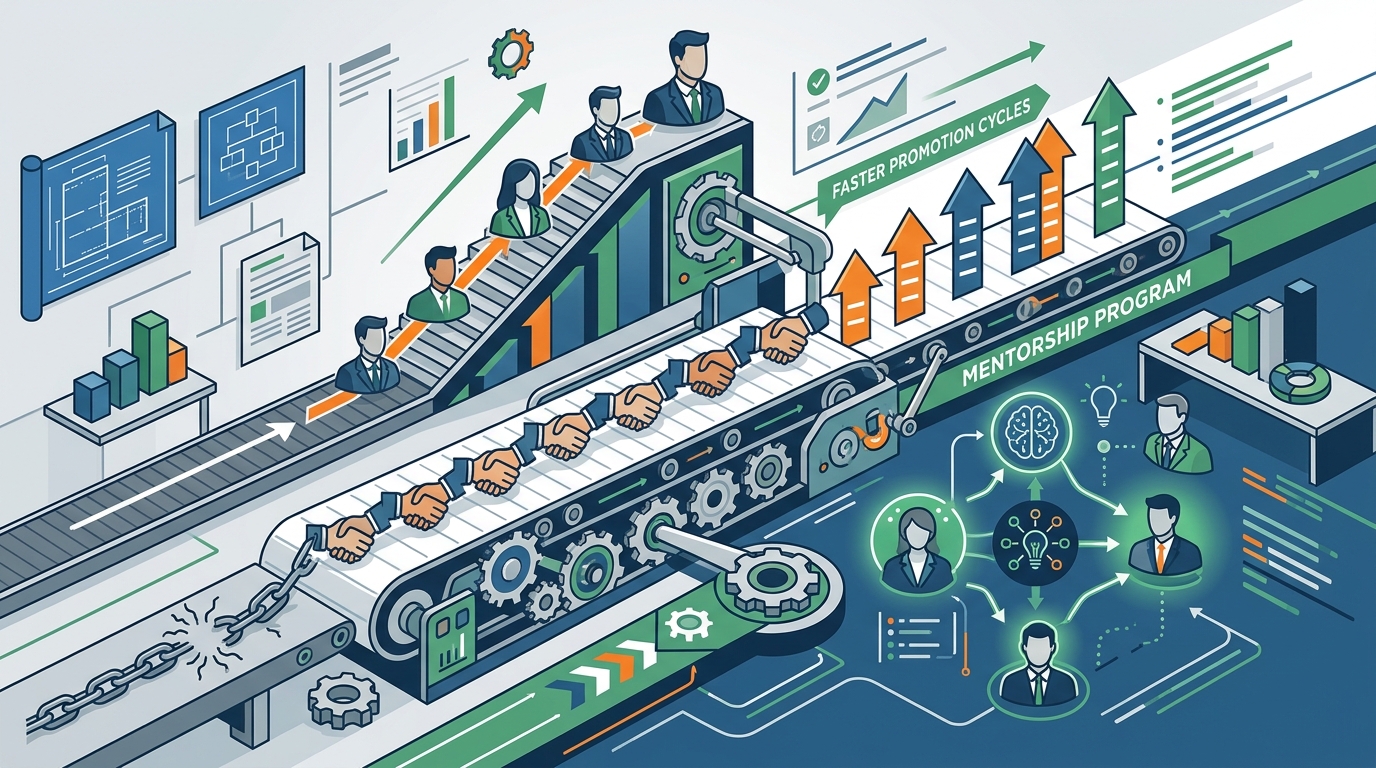
Organizations that prioritize structured mentorship see a measurable acceleration in leadership readiness and operational efficiency. According to industry data, companies with robust mentorship programs report significantly higher employee retention rates and faster promotion cycles compared to those without formal guidance structures. This growth is not accidental. It is the result of deliberate knowledge transfer, strategic alignment, and the cultivation of high-potential talent. For founders and executives, understanding these benefits is critical to scaling sustainably.
Breaking the Founder Bottleneck
One of the most critical challenges in business growth is the founder bottleneck. This occurs when the founder remains the primary decision-maker for every operational detail. As the company scales, this concentration of authority becomes a constraint. Growth stalls because the founder cannot be everywhere at once.
Implementing a mentorship program helps identify and develop internal leaders who can assume greater responsibility. A mentor provides the framework for delegation and trust. This process allows the founder to shift from daily operations to strategic vision. The result is a more resilient organization that does not rely on a single individual for survival.
For leaders seeking to assess their current state, evaluating whether the founder is still the operating system is a vital first step. Founder Bottleneck Checklist resources offer practical tools to diagnose this issue. By addressing this early, businesses can unlock new levels of capacity and innovation.
Accelerating Leadership Development
Mentorship is not merely about advice. It is a structured mechanism for accelerating the learning curve of high-potential employees. Traditional training methods often fail to capture the nuance of real-world business challenges. Mentors bridge this gap by sharing lived experiences and strategic insights.
Leadership development through mentorship fosters confidence and competence. Mentees gain exposure to decision-making processes that they would not encounter in their current roles. This exposure prepares them for future executive positions. Companies that invest in this development see a stronger pipeline of internal talent ready to step up.
The impact of this development is evident in client outcomes. Client Results from mentorship engagements often highlight improved team dynamics and clearer strategic direction. These outcomes are direct indicators of a maturing leadership team capable of driving growth.
Gaining Strategic Clarity
Business growth requires clear strategic direction. However, leaders often struggle with perspective. They may be too close to the details to see the broader market landscape. A mentor provides an external, objective viewpoint that challenges assumptions and reveals blind spots.
This clarity is essential for making high-stakes decisions. Mentors help leaders prioritize initiatives that align with long-term goals. They provide frameworks for analyzing market trends and competitive threats. This strategic alignment ensures that resources are allocated efficiently.
For organizations looking to enhance their strategic capabilities, engaging with expert speakers and consultants can provide immediate value. Keynotes & Workshops offer targeted insights into leadership and mentorship strategies. These engagements can serve as catalysts for organizational change and strategic refinement.
Culture and Talent Retention
Talent retention is a persistent challenge for growing businesses. Employees seek growth, development, and a sense of purpose. A strong mentorship program addresses these needs by providing clear pathways for advancement. It signals that the company invests in its people.
When employees feel supported and valued, engagement levels rise. This engagement translates into higher productivity and lower turnover. The cultural shift towards continuous learning creates a competitive advantage in the talent market.
Furthermore, mentorship fosters a culture of collaboration. It breaks down silos by encouraging knowledge sharing across departments. This collaborative environment enhances problem-solving and innovation. Frequently Asked Questions about mentorship often address these cultural impacts, clarifying how structured programs drive tangible business results.
Comparing Mentorship Models
Not all mentorship programs are created equal. Organizations must choose a model that fits their specific needs and culture. Below is a comparison of common approaches to help guide this decision.
| Mentorship Model | Best For | Key Benefit |
|---|---|---|
| One-on-One Mentorship | Executive development | Deep, personalized guidance |
| Peer Mentoring | Cross-functional collaboration | Shared learning and networking |
| Reverse Mentoring | Digital transformation | Knowledge exchange on emerging tech |
| Group Mentoring | Leadership pipelines | Exposure to diverse perspectives |
Choosing the right model depends on the organization's size, industry, and growth stage. Meet Jamie Mason Cohen provides insights into how these models can be tailored for maximum impact. Understanding these distinctions is crucial for effective implementation.
Key Takeaways
- Mentorship programs significantly reduce the founder bottleneck by developing internal leadership capacity.
- Structured mentorship accelerates leadership development, preparing employees for executive roles faster.
- External mentors provide strategic clarity, helping leaders overcome blind spots and make better decisions.
- Investing in mentorship improves talent retention by fostering a culture of growth and engagement.
- Vistage Top Performer recognition highlights the effectiveness of peer-based mentorship for top executives.
- Choosing the right mentorship model is critical for aligning with organizational goals and culture.
- Engaging with expert speakers can provide immediate strategic insights and catalyze change.
Frequently Asked Questions
How long does it take to see results from a mentorship program?
Results vary based on the program's structure and the participants' engagement. However, many organizations report noticeable improvements in leadership confidence and strategic alignment within six to twelve months.
What is the difference between coaching and mentorship?
Coaching is typically focused on specific skills or performance metrics. Mentorship is broader, focusing on career development, strategic thinking, and personal growth through a long-term relationship.
Can small businesses benefit from mentorship programs?
Yes. Small businesses often face resource constraints. Mentorship provides access to expertise and networks that would otherwise be unavailable, helping them scale more efficiently.
How do you match mentors with mentees?
Effective matching considers goals, personality, and expertise. Structured onboarding processes help ensure that both parties have clear expectations and aligned objectives.
What role does technology play in modern mentorship?
Technology facilitates connectivity, tracking, and resource sharing. It enables remote mentorship and allows for data-driven insights into program effectiveness.
How can event planners incorporate mentorship into corporate events?
Event planners can design workshops and keynotes that introduce mentorship principles. Event Planners resources offer guidance on creating impactful experiences that drive engagement.
Is mentorship only for senior leaders?
No. Mentorship is valuable at all levels. Early-career professionals benefit from guidance, while senior leaders benefit from peer support and fresh perspectives.
Start Your Mentorship Journey
Implementing a mentorship program is a strategic investment in your business's future. It builds leadership capacity, enhances culture, and drives growth. If you are ready to transform your organization, explore the resources available to guide your journey. Visit jamiemasoncohen.com to learn more about how mentorship can accelerate your success.