
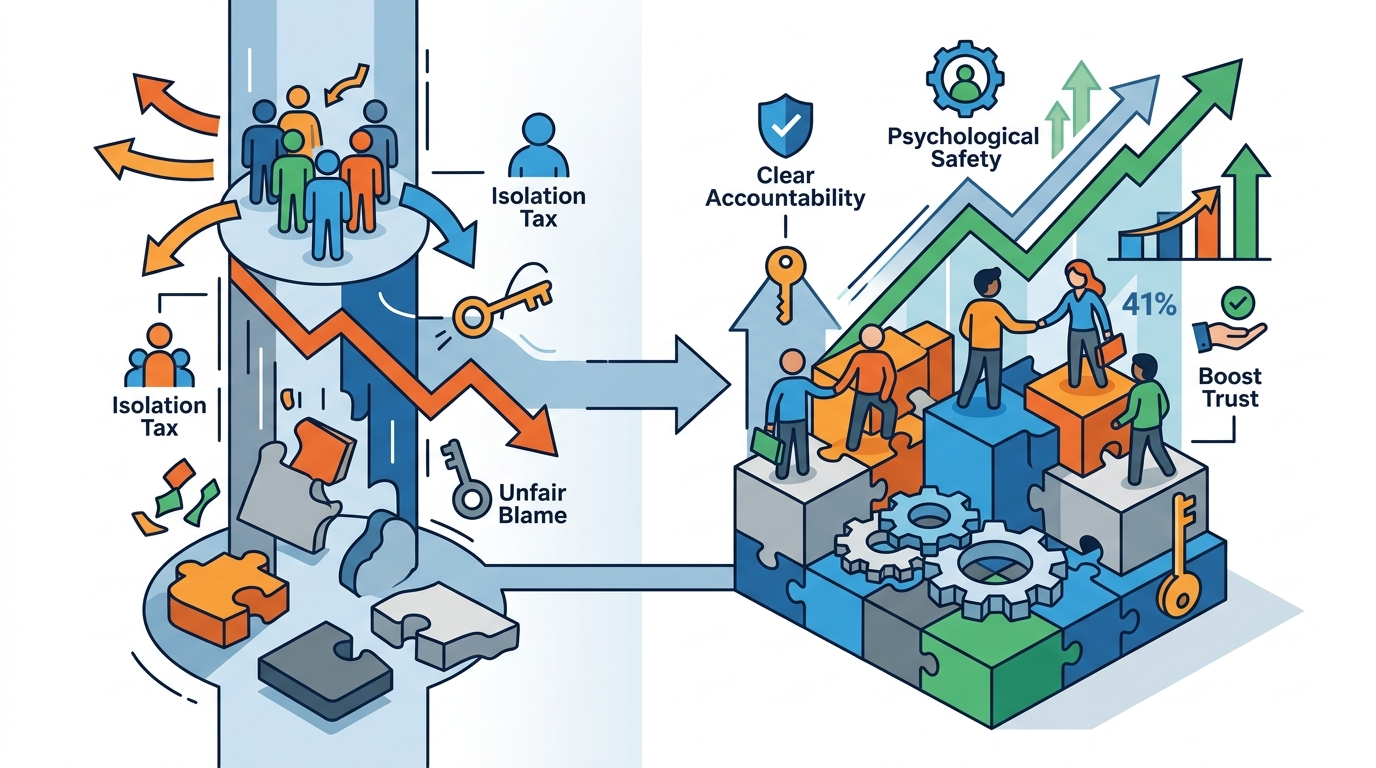
Organizations that prioritize psychological safety and clear accountability see a 41% reduction in voluntary turnover. This statistic highlights a critical shift in modern workforce dynamics. Employees no longer tolerate ambiguity or unfair blame. They demand clarity, respect, and a leadership style that empowers rather than micromanages. Building this culture is not a soft skill. It is a hard business imperative that directly impacts the bottom line.
The Founder Bottleneck and Operational Chaos
Many high-growth companies hit a ceiling not because of market demand, but because of internal structural failure. The founder often remains the primary operating system for the business. This creates a single point of failure that stifles team growth and increases burnout. When leaders cannot delegate, they become bottlenecks. Their teams become dependent, lacking the autonomy to make decisions.
This dependency is a primary driver of turnover. High-performing employees seek environments where they can exercise judgment and see the impact of their work. If the founder controls every outcome, talented staff feel undervalued and stagnant. Breaking this cycle requires a deliberate shift from founder-led execution to leader-enabled strategy. You must move from being the hero of the story to the architect of the system.
For leaders struggling with this transition, assessing your current operational dependencies is the first step. A structured evaluation can reveal where decision-making is overly centralized. This self-awareness is crucial for initiating change. Download the Founder Bottleneck Checklist to identify specific areas where you may be unintentionally blocking your team's progress.
Defining Psychological Safety in the Workplace
Psychological safety is the shared belief that the team is safe for interpersonal risk-taking. It is not about being nice. It is about being candid, challenging ideas, and admitting mistakes without fear of humiliation or retribution. When this safety exists, employees speak up about problems early. They propose innovative solutions that might otherwise be suppressed by fear of failure.
Without psychological safety, accountability becomes punitive. Employees hide errors rather than fixing them. This creates a culture of silence where critical issues fester until they become crises. Building trust requires leaders to model vulnerability. When a leader admits their own mistakes, it gives permission for the team to do the same. This openness accelerates learning and strengthens team cohesion.
Research indicates that teams with high psychological safety are more likely to report higher levels of engagement and lower stress. This environment fosters a sense of belonging that is essential for long-term retention. Jamie Mason Cohen emphasizes that mentorship is a key component in developing this safety. By guiding leaders to listen more and judge less, organizations can cultivate a culture where accountability is a shared value, not a top-down mandate.
The Role of Mentorship in Leadership Development
Mentorship is often viewed as a benefit for junior employees. However, its most profound impact is on the leaders themselves. Senior executives and founders face unique pressures that can isolate them from honest feedback. Peer mentorship groups provide a confidential space for leaders to discuss challenges, refine their strategies, and gain perspective.
Top performers in leadership consistently engage in peer mentorship. This practice helps them avoid the echo chamber of their own success. It provides a reality check on their blind spots and offers alternative solutions to complex organizational problems. For organizations looking to scale, investing in the mentorship of their leadership team is a high-leverage activity.
Leaders who participate in structured mentorship programs report higher levels of confidence and clarity in their decision-making. This clarity translates to better communication with their teams. When leaders are supported, they are better equipped to support their staff. This creates a ripple effect of accountability and growth throughout the organization. Explore keynote workshops designed to equip your leadership team with these critical skills.
Frameworks for Sustainable Accountability
Accountability is not a personality trait. It is a system. Without clear frameworks, accountability becomes subjective and inconsistent. Effective organizations use structured tools to define expectations, track progress, and review outcomes. These frameworks remove ambiguity and ensure that everyone is aligned on what success looks like.
One effective approach is the use of regular check-ins that focus on outcomes rather than activities. This shifts the conversation from "what did you do?" to "what did you achieve?" This outcome-oriented mindset empowers employees to find the best path to the goal. It also allows for flexibility in how work is done, which is crucial for remote and hybrid teams.
Another critical component is the establishment of clear consequences for both success and failure. Consequences should be natural and logical, not arbitrary. When employees understand the direct impact of their actions on the business, they take ownership of their results. This ownership is the foundation of a high-performance culture. Review client results to see how structured mentorship and accountability frameworks have transformed other organizations.
Strategies to Reduce Employee Turnover
Turnover is expensive. It costs time, money, and institutional knowledge. Reducing it requires a proactive approach that addresses the root causes of disengagement. One major cause is the lack of growth opportunities. Employees leave when they feel stuck. They stay when they see a clear path for development within the company.
Another significant factor is the quality of management. People do not leave jobs. They leave managers. Poor management creates a toxic environment that no amount of salary can fix. Investing in management training is one of the most effective ways to reduce turnover. It equips leaders with the skills to support, guide, and inspire their teams.
Creating a culture of recognition is also vital. Employees need to feel seen and appreciated for their contributions. Regular, specific feedback reinforces positive behaviors and builds morale. When employees feel valued, they are more likely to stay and invest in the company's success. This stability allows for deeper strategic planning and more consistent execution. Check the FAQ for more insights on building a resilient organizational culture.
Key Takeaways for Leaders
- Break the Founder Bottleneck: Identify where you are the single point of failure and delegate decision-making authority to your team.
- Prioritize Psychological Safety: Create an environment where team members can speak up without fear of punishment for honest mistakes.
- Invest in Peer Mentorship: Encourage leaders to engage in peer groups to gain perspective and reduce isolation.
- Implement Outcome-Based Accountability: Focus on results rather than hours worked to empower employee autonomy.
- Address Management Quality: Recognize that poor management is a primary driver of turnover and invest in leadership training.
- Provide Growth Paths: Ensure every employee has a clear trajectory for professional development within the organization.
- Measure Cultural Health: Regularly assess employee engagement and psychological safety through surveys and feedback loops.
Frequently Asked Questions
What is the primary driver of employee turnover?
While salary is a factor, the primary driver is often the quality of management and the lack of growth opportunities. Employees leave when they feel undervalued or stagnant.
How can leaders build psychological safety?
Leaders can build psychological safety by modeling vulnerability, admitting their own mistakes, and encouraging open dialogue without judgment. This creates a safe space for risk-taking.
What is the founder bottleneck?
The founder bottleneck occurs when the founder remains the central decision-maker for all critical issues, preventing the team from growing and creating a dependency that stifles innovation.
Why is peer mentorship important for leaders?
Peer mentorship provides leaders with a confidential space to discuss challenges, gain perspective, and avoid the echo chamber of their own success, leading to better decision-making.
How does accountability reduce turnover?
Clear accountability provides employees with a sense of purpose and ownership. When they understand their impact and have the support to succeed, they are more engaged and less likely to leave.
What role does mentorship play in organizational culture?
Mentorship fosters a culture of continuous learning and support. It helps align leadership behaviors with organizational values and ensures that accountability is modeled at the top.
How can I assess my current culture?
You can assess your culture through regular employee surveys, one-on-one feedback sessions, and by observing how conflicts are resolved and how decisions are made within the team.
Next Steps for Your Organization
Building a culture of accountability and reducing turnover is a journey that requires commitment and consistency. It starts with the leaders setting the tone and modeling the behaviors they wish to see. By breaking the founder bottleneck, prioritizing psychological safety, and investing in mentorship, you can create an environment where your team thrives.
Do not wait for another key employee to leave. Take action today to transform your organizational culture. Book Jamie Mason Cohen for a keynote or workshop to help your leadership team navigate this critical transition. Visit jamiemasoncohen.com to learn more about our services and how we can support your growth.